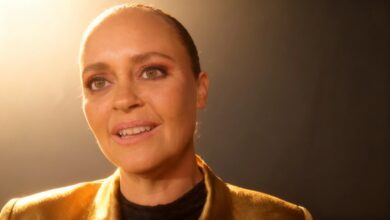
Rosalía’s latest album, “Lux,” has caused such a stir that it even received praise from the highest levels of government, including Prime Minister Pedro Sánchez. Such broad consensus around a musical work is a rare occurrence. The Catalan artist has created a piece imbued with the idea of eternity, sparking a wave of discussions. Commentaries range from thoughtful analyses of musical references—which set this new album apart from her previous work, “Motomami”—to breakdowns of her fashion choices. Even the recipe for the sponge cake she shared with viewers on David Broncano’s TV show became a topic of fascination, pushing the program to record ratings.
Behind the singer’s success have always stood her mother, Pilar Tobella, and her sister, Pilar Vila. The former iron-handedly manages finances through the Motomami company, while the latter oversees artistic direction and style. These two strong, capable women are the artist’s steadfast support. Rosalía’s maternal grandmother, after whom she was named, also played a significant role in shaping her worldview. As a child, the future star watched old films featuring Carmen Sevilla and Lola Flores alongside her grandmother, absorbing the spirit of Spanish culture. Her grandmother always reminded her of the importance of family and faith—values that resonate in her work.
Rosalía’s personal life, including her relationships with C. Tangana, Rauw Alejandro, and actor Jeremy Allen White, is constantly under the watchful eye of the paparazzi. However, she only recently spoke about her father for the first time. José Manuel Vila San Segundo, a native of the picturesque Asturian town of Cudillero, used to work in industrial real estate deals. He is a private person who has a passion for art, motorcycles, and nature, and his social media profile reveals nothing about his connection to a global superstar.
But the most intriguing details of her family history lie deeper. The singer’s father’s roots trace back to Galicia. His father, Manuel Vila García, Rosalía’s grandfather, was born in Vigo in 1920. His own father, Rosalía’s great-grandfather, was José Vila Blanco, a businessman with Cuban citizenship. In 1919, he married Amparo García Carrera. After the wedding, the couple lived in Ponteareas (province of Pontevedra), where Rosalía’s great-grandfather was even elected to the city council in 1925. During that time, he owned a bus company operating the route between Las Nieves and Vigo. But by 1926, the entire family set out across the ocean in search of a better life.
The lineage of her paternal grandmother, Lucrecia San Segundo Hidalgo, traces back to the province of Ávila. Her father, Fabriciano San Segundo Muñoz, held the positions of controller and director at the Central Bank of Ávila. Her mother, Luciana Hidalgo Delgado, came from a noble family in Velayos. Rosalía’s great-great-grandfather, Tiburcio Hidalgo Arevalo, was a true business magnate of his time. He owned a major legume trading company and raised 13 children. After his death, the business continued to grow, and by the early 1920s, a branch was opened in America. Their chickpeas were said to be of exceptional quality and in great demand across the ocean—on the very continent that now applauds his talented great-great-granddaughter.