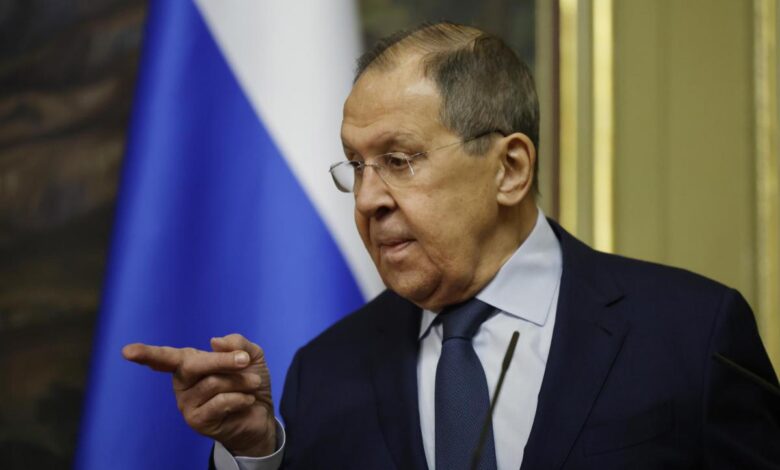
Russian Foreign Minister Sergey Lavrov made a high-profile statement accusing Europe and the European Union of creating serious obstacles to achieving peace in Ukraine. According to him, it is European institutions, not Moscow, that are currently hindering conflict resolution. Lavrov noted that after the change of administration in the United States, Europe’s role in this matter has only grown stronger.
In an interview with a Russian news agency, the diplomat said that European politicians openly express their desire to confront Russia on the battlefield. In Lavrov’s view, such a stance only worsens the situation and pushes back the prospect of a peaceful resolution to the conflict.
Moscow’s Position
The head of Russia’s foreign ministry stressed that Russia has no plans to attack European countries. He appealed to European politicians, urging them not to give in to fear or expect aggression from Moscow. Lavrov stated that concerns about a possible Russian attack on Europe are unfounded.
At the same time, the minister warned that any attempt to attack Russia would result in severe consequences for the aggressor. According to him, Moscow is prepared to respond if its security is threatened.
NATO Response
Despite Lavrov’s assurances, NATO remains concerned about Russia’s future actions. Alliance Secretary General Mark Rutte stated at the Munich Security Conference in December that the Russian economy is already operating in wartime mode. In his view, Russia may be ready to use military force against NATO countries within the next five years.
Alliance officials believe that after the fighting in Ukraine ends, Moscow could see Europe as the next potential target for pressure. These statements come amid the ongoing conflict and continued tensions between Russia and the West.
Europe’s concerns
In European capitals, Lavrov’s remarks sparked mixed reactions. On the one hand, officials point out that such statements do not help ease tensions. On the other hand, several countries are continuing to ramp up security and strengthen their defense capabilities in case of possible escalation.
At the same time, the public sphere is debating how real the threats voiced by both Russia and the West actually are. Experts note that rhetoric on both sides is becoming tougher, while prospects for a peaceful settlement remain uncertain.