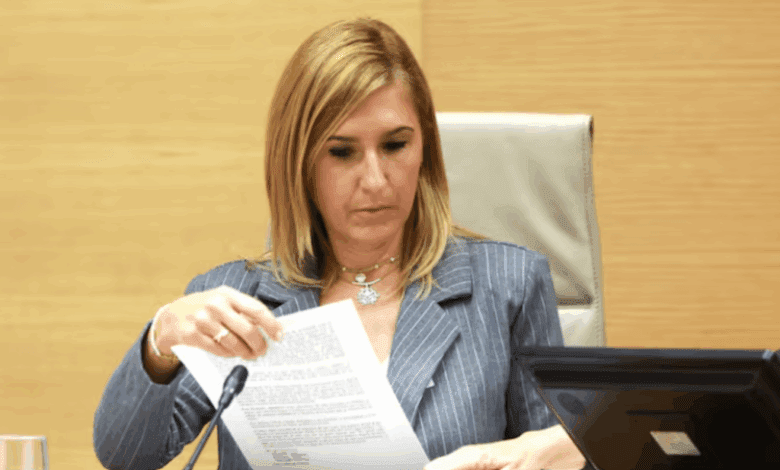
On Monday, the parliamentary commission investigating the authorities’ actions during the devastating DANA that struck Valencia on October 29, 2024, convened in Madrid. The disaster claimed 230 lives, and questions about the response of emergency services and regional leadership persist to this day. This time, former head of the Justice and Interior Department of the Generalitat Valenciana, Salomé Pradas, as well as former secretary of the regional government, Cayetano García Ramírez, appeared before lawmakers.
Pradas, who is currently under criminal investigation in the court of Catarroja, became a central figure in the hearings. She was summoned after commenting on her actions on the day of the tragedy during a television broadcast. Prior to this, the commission had postponed her appearance, even though her name was among the first on the list of witnesses.
Investigation progress
Shortly after the interview, Pradas provided Judge Nuria Ruiz Tobarra with her correspondence with then-President of the Generalitat Valenciana, Carlos Mazón, and his chief of staff, José Manuel Cuenca. The messages show that from the morning of October 29, Pradas kept the leadership informed of the developing situation. She reported increasing threats in the Ribera Alta area, the critical state of the barranco del Poyo and río Magro, and the implementation of hydrological alerts in several municipalities.
On the same day, emergency services were put on high alert, with firefighters and rescue teams deployed to the hardest-hit areas. Pradas also urged people to exercise caution due to the approaching storm along the coast. Despite the alarming reports, President Mazón did not alter his work schedule.
Internal decisions
In the correspondence presented to the court, it is evident how Cuenca instructed Pradas on crisis management. At 4:28 pm, half an hour before the Cecopi operational committee meeting began, Pradas reported the first fatality in the city of Utiel. Later, as the situation worsened, Cuenca insisted there should be no lockdown for residents: “Salo, no quarantines please, keep calm,” his message read.
That same day, Pradas stayed in contact with the government’s delegate in Valencia, Pilar Bernabé, and coordinated with local firefighters and civil protection services. Authorities tried to respond quickly to incoming information, but the magnitude of the disaster took even seasoned experts by surprise.
The role of other officials
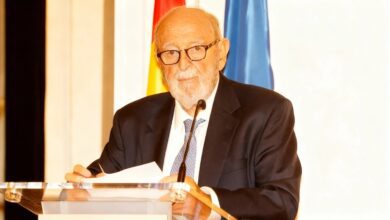
At 3:30 p.m., Cayetano García Ramírez spoke at the commission meeting. At the time of the tragedy, he served as secretary of the autonomous government and now works in the economic department of Juanfran Pérez Llorca’s administration. He stated that he was the one to whom Pradas turned for legal advice regarding a possible lockdown. Their conversation lasted just over five minutes that day, but it was during this period that key decisions were made in response to the disaster.
Testimony indicates that the regional leadership acted under conditions of extreme uncertainty. Every step was discussed in a small circle, and responsibility for the consequences rested on just a few shoulders. The question of whether such a large-scale loss of life could have been prevented remains unanswered.
Next steps
The commission continues to review the actions of everyone involved in the events of October 29. Special attention is being paid to communication between different levels of government and the timeliness of the decisions made. Investigators are also examining how information about the looming threat was shared between agencies and why stricter safety measures were not implemented.
In the coming weeks, new hearings and the publication of additional materials are expected, which may shed light on the details of the tragedy. The families of the victims and those affected are waiting for answers, while the public closely follows the progress of the investigation.