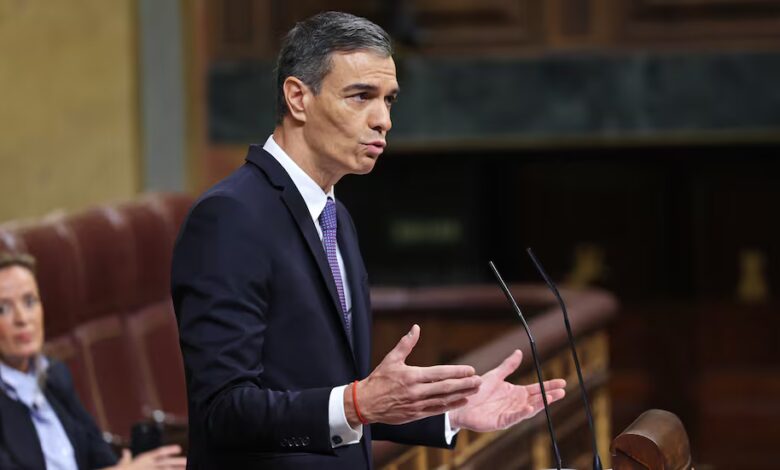
A heated debate has reignited in the Spanish parliament over the future of public services. Prime Minister Pedro Sánchez emphasized how, in regions governed by the Partido Popular (PP), there is a gradual shift towards the private sector. In his view, this is having a negative impact on the accessibility and quality of healthcare, education, and social support.
Sánchez paid particular attention to the situation in Madrid. He noted that a significant portion of the region’s healthcare budget is allocated to contracts with private clinics, especially the large Quirón network. As a result, according to him, residents of the capital are increasingly being forced to purchase private insurance in order to receive timely medical care. In recent years, the number of such policies has grown by 16%, signaling a decline in trust in the public healthcare system.
The Prime Minister also stated that despite increased funding for the autonomous communities from the central government, in Madrid and other regions dominated by the PP, these resources are often used to provide tax breaks to the wealthy and sign contracts with private companies. As a result, according to Sánchez, waiting times for medical services are rising and the quality of care is declining.
Andalusia and Other Regions: Longer Waiting Lists and Growing Discontent
According to the Prime Minister, the problems are not limited to the capital alone. In Andalucía, since 2019, around 4 billion euros have been spent on private medical services. This has caused a sharp increase in the number of patients waiting for diagnostics or surgery. Currently, nearly 850,000 residents in the region are waiting for medical examinations, and another 200,000 are waiting for surgical procedures. Sánchez considers this situation unacceptable and notes that similar trends are being seen in other autonomous regions governed by the PP.
During his address, the Prime Minister also pointed out that such policies lead to social inequality. In his view, access to quality services is becoming a privilege for those who can afford private insurance, while everyone else faces lengthy waits and worsening conditions.
Political rivalry and challenges for the opposition
Sánchez used the parliamentary platform to contrast his social model with that of the opposition. He stressed that defending public schools, hospitals, and social institutions is not just a matter of ideology, but a foundation for the country’s future. The Prime Minister also called on other parties not to obstruct key laws aimed at protecting children online, supporting families, and strengthening the healthcare system.
A key part of his speech was dedicated to criticizing parties he believes are fueling political deadlock and hindering the adoption of decisions crucial for society. Sánchez also addressed the upcoming elections in Valencia, urging that residents be allowed to decide the future of their region’s autonomy for themselves.
Looking Ahead: State or Market?
The debate over privatization and the role of the private sector in Spain is intensifying as regional elections approach. The question of which path the country will take—strengthening the public sector or further advancing market mechanisms—remains unresolved. Sánchez made it clear that he intends to fight to preserve and develop the welfare system, despite resistance from the opposition and challenges from other political forces.