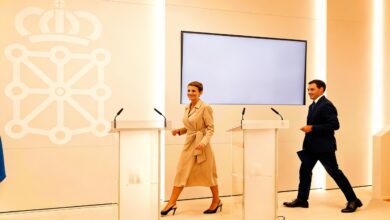
Spanish Prime Minister Pedro Sánchez has decided to change the government’s strategy after a challenging year and a significant loss of influence in parliament. He has called on coalition ministers from PSOE and Sumar to draft a list of specific social initiatives that can be implemented without requiring Congress approval. The main goal is to regain momentum and strengthen ties with citizens who are increasingly affected by rising prices and housing market issues.
Sánchez insists that each initiative must be clearly understandable, easy to implement, and have a tangible impact on society. It is essential that these measures are visible and directly associated with the central government, rather than with regional administrations dominated by the opposition.
Seeking new solutions
Ministers have been instructed to present three to four proposals each, which could be implemented as early as 2026. The prime minister stresses that these initiatives should be ambitious but should not require substantial budget spending. This approach will allow the government to act independently of complex negotiations with other parties, especially Junts and Partido Popular, which have already blocked a number of key reforms.
Among the top priorities are support for families, young people, and pensioners. For example, there are discussions about further increasing the minimum wage, which has already risen by 61% during Sánchez’s tenure. By 2026, it is planned to raise it to €1,221–1,240 per month and to consider tax breaks for this category of workers.
Social programs
Among the new measures is government support for the purchase of glasses and contact lenses for children under 16. The assistance could amount to up to €100 per person. This decision aims to ease the financial burden on families and improve access to medical goods for minors.
Employment issues are also in focus. Specifically, the government highlights the role of the defense industry in creating jobs in regions such as Soria, Jaén, and Teruel. In the coming years, over €10.4 billion will be allocated to the sector’s development to reach the target of 2% of GDP for military spending.
Political tactics
Sánchez prefers not to reveal the details of new initiatives before key election campaigns in Aragón, Castilla y León, and Andalucía. This approach helps maintain intrigue and boost interest in the government’s actions, especially in light of recent setbacks, such as in Extremadura, where the socialists lost some support due to voter disappointment.
At the same time, several important decisions, such as pension indexation and salary increases for public sector employees, will still require parliamentary approval. However, the government plans to focus on steps it can implement independently to demonstrate its effectiveness and initiative.
Financial constraints
With uncertainty surrounding the approval of the 2026 budget, Sánchez is urging ministers to exercise particular caution when planning expenditures. New measures should not lead to a significant increase in state spending. This is especially important amid challenging negotiations with parliamentary groups and no guarantee of support from the opposition.
In December, the Ministry of Transport already submitted projects worth over 3 billion euros to the government, serving as an example of how large-scale initiatives can be implemented without Congress’ involvement. This approach is expected to be used further in the future.
Competing with the opposition
The government emphasizes its role as a protector of public interests and state services, positioning itself against the opposition, which it accuses of attempting to roll back social programs. Sánchez seeks to show that even in times of political instability, the executive branch can make decisions that matter to citizens’ daily lives.
In the coming months, new initiatives are expected to be unveiled in response to public demands and to strengthen the government’s position ahead of the elections. The authorities are focusing on concrete, tangible changes to regain voters’ trust and demonstrate their ability to act independently of the current parliamentary dynamics.