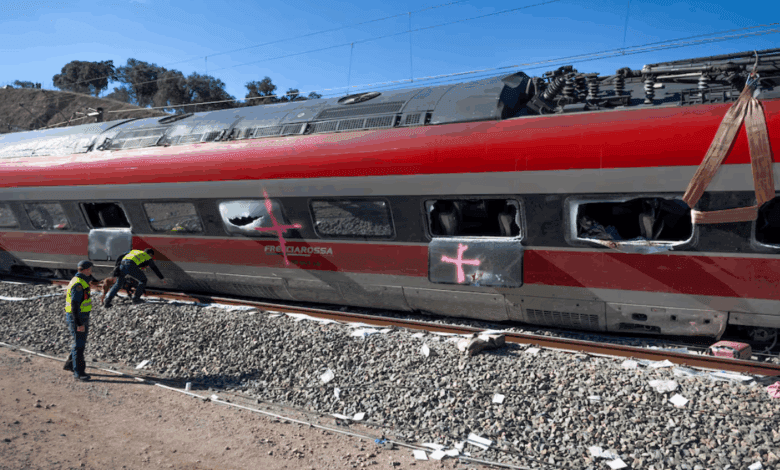
The investigation into the Adamuz train disaster has taken a new turn after it emerged that Adif removed rail parts and welded joints from the accident site before receiving official court authorization. For Spaniards, this raises concerns not only about potential challenges in determining the cause of the accident but also about the transparency of railway operations. Such actions may undermine trust in the investigative system and jeopardize the objectivity of the judicial process.
Incident Details
The disaster occurred on the evening of January 18, when an Iryo train derailed in Adamuz, resulting in a collision with a Renfe Alvia train. The tragedy claimed 46 lives. Once rescue operations concluded on January 22, Adif staff began removing damaged sections of track, citing the need to protect them from further deterioration. However, this was done without prior court approval and without standard procedures for preserving evidence.
The materials were delivered to the technical maintenance base in Hornachuelos, even though official authorization for such work using heavy machinery was only granted on January 27. The court had set strict conditions for access to the accident site to ensure the preservation of all evidence. Nevertheless, by the time of a repeat inspection on January 30, representatives of the Civil Guard and experts from the Accident Investigation Commission (CIAF) found that key elements were already missing from the site.
Court response and consequences
The judge from Montoro expressed dissatisfaction with Adif’s actions and formally warned the company that such steps without court authorization are unacceptable. It was noted that repeating such actions could lead to criminal liability. On February 2, law enforcement officials reminded Adif of the need to follow procedural rules, and on February 3, the materials were sealed by the police to prevent further tampering.
On February 9, Adif, together with Ineco, prepared a detailed report on the movement of all seized elements to restore the chain of custody for the evidence. The following day, the judge again emphasized the strict ban on any actions without court approval. According to Ale Espanol, this incident sparked a wave of discussion among experts and the public, as questions regarding the transparency of the investigation remain unresolved.
Questions about the investigation
The scandal surrounding the removal of evidence has prompted new complaints and court filings. According to RUSSPAIN.COM, 34 claims regarding this tragedy have already been submitted in Córdoba, and the investigation continues into 148 separate incidents. Authorities have pledged to introduce additional safety measures on the railways, but public trust in the investigation system has been visibly shaken. Questions regarding the work of railway companies and regulatory bodies remain pressing, while public attention to the case shows no signs of waning.
In recent years, Spain has faced several major railway accidents, each sparking intense public reaction and leading to a review of safety standards. After the 2013 tragedy in Galicia, requirements for track maintenance and train control became more stringent. However, new incidents like the one in Adamuz reveal ongoing issues with investigation transparency and the preservation of evidence. Experts stress that only strict oversight and full compliance with procedures can restore confidence in the country’s railway system.