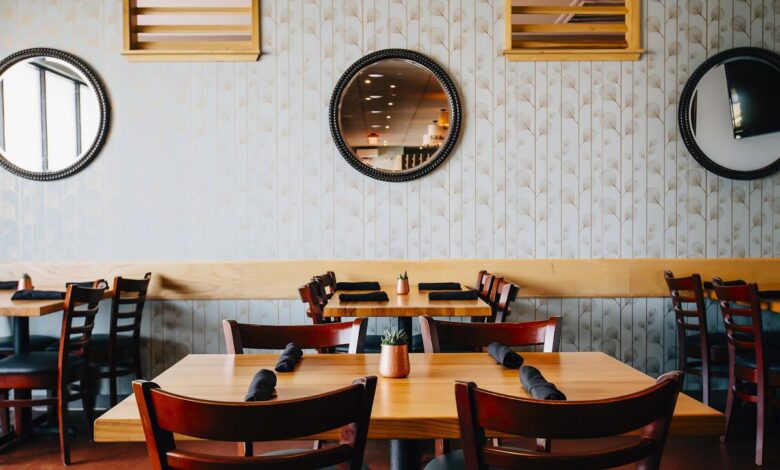
In recent years, Spanish restaurants have increasingly faced the problem of empty tables due to no-shows. For many owners, this is not just an inconvenience but a real threat to their income. An incident at a restaurant in Badajoz vividly illustrated how serious the issue of responsibility is when booking tables.
The owner had to reconsider his approach to clients after one woman reserved a table for six with a stroller on three separate weekends. She failed to show up on any of the dates, and when contacted, her explanation surprised even the most seasoned restaurateurs.
An unexpected response
When a restaurant employee tried to find out the reason for her no-show, the customer calmly explained that she didn’t know when she would be able to come, so she decided to book several dates at once. This approach deprived the restaurant of the chance to serve other guests and led to direct losses. The owner noted that such actions force restaurants to tighten booking policies and prioritize guests who actually show up.
The restaurant has a violation tracking system: if a customer doesn’t show up, a note is made that may affect their ability to book tables in the future, especially on popular days. However, even these measures do not always prevent abuse.
Business response
Restaurateurs across Spain are increasingly requiring a bank card number when booking a table. This allows them to charge a fee in case of a no-show to at least partially offset their losses. Some establishments have already introduced penalties that can reach substantial amounts, especially for large parties or last-minute cancellations.
A restaurant owner from Badajoz admitted that such cases put the very idea of trust between the establishment and its guests into question. He wonders whether, in the future, it will be necessary to take advance payment from everyone who wants to reserve a table in order to avoid such situations.
The consumer perspective
At the same time, discontent is growing among customers, who consider these penalties excessive. Consumer rights organizations have already taken note of this new practice and filed complaints against several restaurants, accusing them of imposing ‘unjustified sanctions’ for canceled reservations.
Experts note that penalties can be justified only in the case of cancellations just a few hours before the visit or when booking for a large group. However, the widespread adoption of such measures is controversial and may lead to conflicts between venues and customers.
Changing culture
The case in Badajoz has sparked a discussion about how restaurant-going culture in Spain is changing. Whereas previously booking a table was a matter of courtesy, now it is turning into a legally binding agreement with potential financial consequences.
Restaurateurs are forced to find a balance between protecting their interests and maintaining customer loyalty. Some establishments are already abandoning reservations in favor of walk-in queues to avoid losses and conflicts.
In recent months, cases have been reported across the country where customers book several dates at once without actually planning to visit. This prevents other patrons from getting a table and causes owners to lose profits. In response, restaurants are tightening their policies while consumers demand transparency and fairness.
Similar incidents have occurred in other Spanish cities, where customers collectively failed to show up for reserved tables, especially during holidays. Some establishments were even forced to close for several days due to losses. As a result, the discussion of new reservation policies and possible penalties has become one of the hottest topics in the country’s restaurant industry.