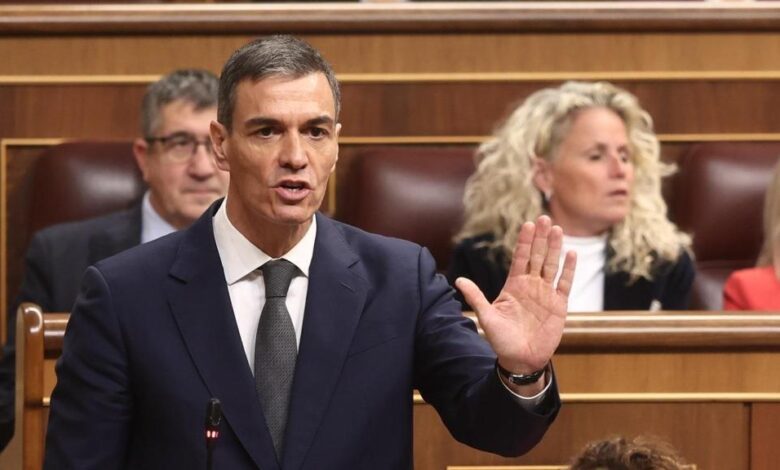
A tense power struggle erupted in the Spanish Congress on Wednesday: the absence of Prime Minister Pedro Sánchez and as many as seven members of his cabinet gave the opposition an opportunity to intensify pressure on the government. Key questions and accusations are now directed at First Deputy Prime Minister and Finance Minister María Jesús Montero, Minister of the Presidency, Parliamentary Relations and Justice Félix Bolaños, and Transport Minister Óscar Puente. This alignment of forces could have unexpected consequences for the country’s entire political system.
While Sánchez is on an official visit to India, attending an international meeting on artificial intelligence, his colleagues have to hold the line in Madrid. Opposition MPs did not miss the chance to exploit the situation: they are demanding answers to the most pressing issues related to the economy, transport, and judicial reform. The atmosphere in the chamber reached a boiling point—every response from the ministers sparked further comments and emotional speeches.
Questions without answers
The absence of the head of government has sparked discussions not only about current issues but also the overall strategy of those in power. The opposition is demanding explanations for recent decisions which, in their view, were made without sufficient debate. Particular attention is focused on budget distribution, transport sector reforms, and relations with the judicial system. Ministers are forced to answer tough questions, often dodging direct answers or shifting the conversation to other topics.
In the corridors of Congress, some discuss that this situation may recur if the Prime Minister continues to be frequently absent from key meetings. Some deputies believe this undermines trust in the executive branch and creates a sense of instability. Meanwhile, government supporters insist that all decisions are made collectively and that Sánchez’s absence does not affect the cabinet’s effectiveness.
Political Intrigue
The surge in opposition activity is reminiscent of recent events, when, after the tragedy in Adamus (Adamus), Sánchez’s political opponents demanded his resignation and immediate explanations. At that time, the situation escalated into a real scandal, covered in detail in the report on the political pressure on the government after the Adamus accident. Now, despite another pretext, the opposition’s rhetoric remains just as tough, and their demands — uncompromising.
There is also unrest within the ruling coalition itself. Some ministers are frustrated that they have to assume responsibility for decisions usually made public by the Prime Minister. This is causing additional tension and could spark new conflicts within the government.
Consequences for the country
For Spaniards, what is happening in Congress is more than just a political game. The decisions made these days will determine the future of key reforms and economic stability. Many citizens are concerned that the lack of a unified decision-making center could stall important processes and trigger new crises.
In recent years, similar situations have already occurred: the absence of leaders at important meetings has repeatedly drawn criticism and even sparked mass protests. Each time, this has heightened social tensions and led to new demands for government transparency. Now all eyes are on how the ministers will handle the pressure and whether they can keep control of the situation.
In recent months, Spain has seen a rise in cases where the opposition takes advantage of the absence of key figures to strengthen its position. Such episodes have already led to high-profile scandals and even temporary paralysis of parliamentary work. One recalls how, after major accidents or controversial government decisions, public dissatisfaction quickly escalated into political crises. These events trigger new debates about the role of the prime minister and ministerial responsibility in times of instability.