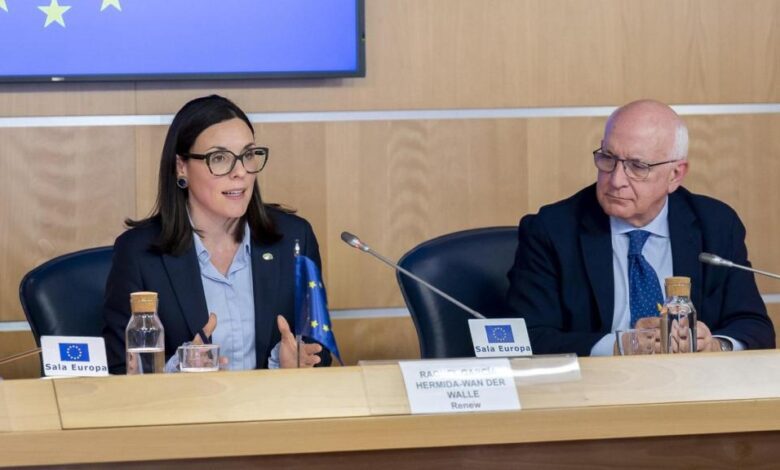
The Spanish government’s decision to ignore the European Parliament delegation that arrived to assess corruption and the rule of law has sparked a reaction in the country’s political circles. This move could deepen distrust toward the authorities and affect Spain’s reputation on the European stage. For many citizens, this is a worrying sign: issues of transparency and accountability remain unresolved, and trust in institutions is once again at risk.
The meeting that never happened
The European Parliament delegation that came to Madrid expected to engage in dialogue with key government officials. However, neither Prime Minister Pedro Sánchez nor Justice Minister Félix Bolaños made time for a meeting, despite having received formal invitations in advance. The MEPs received only an official letter from the president’s chief of staff, citing a foreign trip. Within the delegation, this refusal was seen as a clear snub and even a personal affront.
Instead of ministry leaders, mid-level officials were sent to the meeting, and they unexpectedly presented a new draft law on public integrity. However, not a single high-ranking official capable of providing answers to key questions was present. The MEPs noted that such disregard is extremely rare and compared the situation to isolated instances in other EU countries where authorities also avoided dialogue with European observers.
Delegation’s reaction and consequences
Mission head, Dutch MP Raquel García Hermida, emphasized that such behavior does not align with European standards of transparency. She noted that in most countries, such meetings are considered mandatory, and refusals are the exception. Within the delegation, some believed that the Spanish government deliberately avoided discussing topics related to judicial independence, corruption, and press freedom.
Particular concern arose from the fact that not only the Prime Minister and Minister of Justice, but also the heads of key state companies declined to engage in dialogue. Among them were the heads of transport and infrastructure agencies, who were invited to discuss high-profile corruption cases. As a result, the delegation received no answers to critical questions, further deepening the atmosphere of mistrust.
Criticism and tension
During the visit, Members of the European Parliament received numerous reports from representatives of the judiciary and prosecution about pressure from the authorities. According to them, judges and prosecutors handling politically sensitive cases face attempts at discredit and pressure that go beyond ordinary criticism. This raises concerns about the independence of the judicial system and the transparency of investigations.
According to the delegation, political tension in Spain has reached a high level. Domestic disputes and social polarization have become major findings of the mission. MEPs note that such an atmosphere could negatively affect citizens’ trust in institutions and the stability of democratic processes.
Context and comparisons
The situation regarding Spanish authorities refusing to engage in dialogue with European observers echoes recent events in other EU countries. For example, last year a similar incident occurred in Greece, where the Prime Minister also cited being busy in the midst of an election campaign. In Slovenia and Poland, such cases sparked heated debates and criticism from European institutions.
This is not the first time Spanish authorities’ actions have been questioned by European partners. Recently, a conflict between Madrid and Rome drew attention, when Spain was excluded from key negotiations ahead of the EU summit. More details about this standoff can be found in the article on how disagreements between Sánchez and Meloni have affected Spain’s position in Europe.
In the coming months, the European Parliament will prepare a detailed report based on the visit, which will assess not only the current situation but also the dynamics of change in Spain. Special attention will be given to issues of press freedom and pluralism of opinion, as well as the independence of the judicial system. The findings of this report could influence future relations between Madrid and Brussels.
In recent years, European delegations have increasingly faced difficulties when trying to establish dialogue with national governments on issues of corruption and the rule of law. In 2023, similar problems arose in Greece and Poland, where authorities also avoided meetings with EU representatives. Such incidents have sparked debates about the role of European institutions and the need to strengthen control mechanisms to ensure compliance with democratic standards in member states.