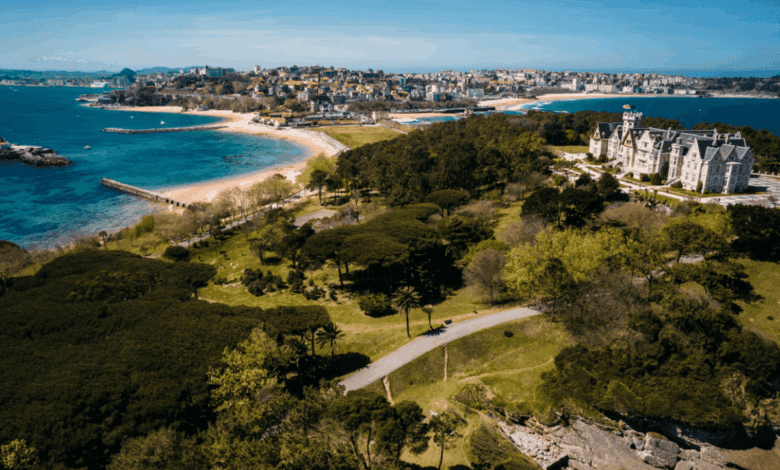
A conflict has erupted in the heart of Santander that for several months has been making headlines in Spanish media. The Ministry of Democratic Memory has announced the start of a process to designate the Magdalena Peninsula as a site of memory, recalling that during the Civil War it housed one of the most notorious concentration camps of the Franco regime. The decision sparked a wave of outrage among city and regional authorities, who believe such actions only rekindle old grievances and divide society.
The Santander City Hall and the government of Cantabria, both controlled by the People’s Party, sharply criticized the initiative. In their view, revisiting these tragic chapters of history does not promote reconciliation but only heightens tensions. Municipal representatives even tried to block the process, arguing that the camp was not located in the famous palace but in the stables, and insisted that the peninsula’s current status as a cultural and tourist center should not be overshadowed by such reminders.
Historic wounds
Nevertheless, supporters of recognition insist: the truth must be spoken, and the memory of the victims preserved. According to them, the Magdalena Peninsula is not just a picturesque spot with a palace, zoo, and beaches, but a place where thousands experienced the horrors of imprisonment. After the fall of the Northern Front and isolation from the rest of Republican Spain, for many prisoners the only chance of survival was to swim across the cold waters of the Bay of Biscay.
Archival documents show that the camp was designed for 600 people, but at times held more than 1,600 prisoners. They were forced to give the fascist salute, sing anthems, attend mass, and take part in activities to shape the “Spanish spirit.” The conditions were horrific: hunger, cold, overcrowding, and diseases such as typhus, scabies, and tuberculosis. Mortality was extremely high, and, according to eyewitnesses, the bodies of those who died were often thrown onto the shore so that sea currents would carry them away.
The struggle for memory
Many prisoners waited months for interrogations, and some died before they ever faced trial. The camp on Magdalena became something of a model for similar institutions across the country, and Francoist propaganda actively used it to showcase its ‘strength’ and ‘order.’ Memorial organizations in Cantabria believe that this is precisely where a commemorative plaque should be installed to tell of the tragedy and serve as a reminder of the fates of thousands.
In October, the ministry explained its position in detail: out of the 188 concentration camps that existed in Spain after the war, Magdalena stood out for its exceptional brutality and significance. The peninsula’s geographic location made it virtually impregnable—escape was only possible by swimming, and the authorities had absolute control over the area. For many local residents, these facts came as a revelation, as the peninsula had been associated exclusively with summer festivals, leisurely walks, and the royal residence until now.
Fierce debates
The decision to initiate the recognition procedure was published in the official state bulletin, launching a period of public discussion. All objections from the municipality and regional authorities were rejected. The mayor of Santander, Gema Igual, openly expressed her indignation: in her view, the city should look to the future rather than ‘drag ghosts from the past’ and spend resources on ‘tarnishing’ the 117-year history of one of the region’s most iconic sites.
Cantabria’s president, María José Sáenz de Buruaga, supported this view, calling the situation ‘sad’ and ‘divisive for society.’ She insists that Spain should move towards reconciliation, not new conflicts. Cantabria’s parliament even adopted a special resolution urging the central government to drop the disputed status for the peninsula.
Tourism and remembrance
Today, the Magdalena Peninsula is not only a historic symbol but also a popular leisure destination with its palace, zoo, museums, and beaches. Concerts, exhibitions, and family celebrations are held here. However, a shadow of the past has once again fallen over these picturesque landscapes. City authorities insist that the camp was located in the stables, not in the palace itself, and believe that it is wrong to ‘disgrace’ a place that for many Santander residents has become a symbol of joy and pride.
Meanwhile, memorial organizations are demanding that the truth about the tragedy be officially recognized. For them, designating the peninsula as a site of remembrance is not just a formality but an important step toward restoring historical justice. The debate continues, and it remains unclear how this battle for the past—where memory, politics, and tourism collide—will ultimately end.