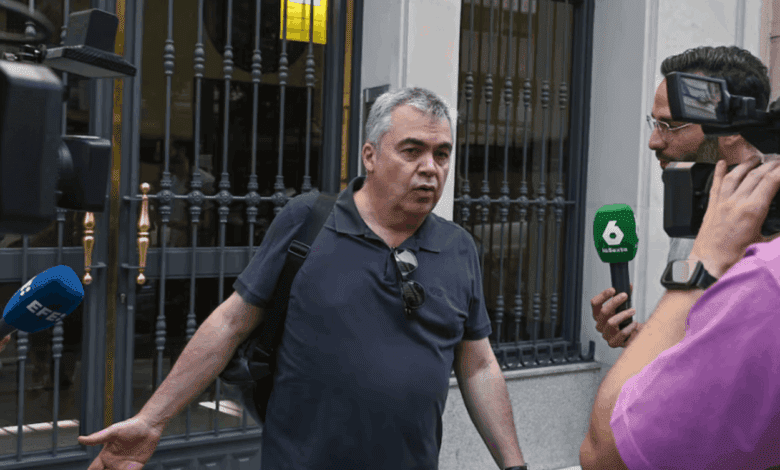
Former organizational secretary of the Spanish Socialist Workers’ Party (PSOE) Santos Cerdán is at the center of a high-profile investigation amid suspicions of corruption. This time, public attention is focused on the delayed release of a crucial report prepared by the Central Operative Unit of the Civil Guard (UCO). Commissioned back in June, the document is expected to shed light on Cerdán’s financial situation and, according to his defense, could dispel the allegations that have shaped public opinion for several months.
Cerdán’s lawyers have filed an official motion with the Supreme Court demanding that UCO be compelled to immediately submit the report. Their statement emphasizes that the absence of this document undermines their client’s right to the presumption of innocence. According to the defense, all previous court rulings and investigative materials portray Cerdán as the presumed organizer of a scheme to receive bribes in exchange for distributing public contracts. The case also involves former Transport Minister José Luis Ábalos and his former advisor Koldo García.
Allegations and Defense
The defense insists that the charges against Serdan are unfounded and will be completely refuted after the publication of the report on his assets. As an example, the lawyers point out that when choosing a preventive measure, the judge hinted at the possibility that Serdan received at least 4.5 million euros in kickbacks, but no concrete evidence was presented.
The defense is particularly outraged by the claim that Serdan allegedly owns 45% of Servinabar, which the investigation considers a ‘front’ for illicit profits from government contracts. The lawyers categorically deny their client’s involvement in the company’s ownership, though they do acknowledge that the company is engaged in real activities and its employees received official salaries, as even photo evidence confirms.
Key details of the case
The case materials involve not only financial flows but also issues related to the identification of business owners. Serdan’s defense emphasizes that despite the accusations, none of the potential witnesses who could either confirm or refute the investigation’s version have been questioned so far. According to the lawyers, this points to a biased investigation and attempts to shape public opinion about their client’s guilt.
At the same time, representatives of Serdán emphasize that Servinabar is indeed engaged in legitimate business activities, and all employee payments were official and documented. However, investigators continue to insist that the company was used to transfer funds obtained through corruption schemes.
Investigation Delays
The timing of the UCO report submission has become central to the current stage of the proceedings. The defense believes that artificially delaying the release of the document plays into the prosecution’s hands, allowing suspicions around Serdán to persist. Lawyers are confident that once the report is made public, many of the accusations against their client will prove unfounded.
Legal experts continue to debate why such a critical document has still not been submitted to the court. Some argue the delay might be due to internal disagreements between investigative bodies and the judiciary, while others see it as an attempt to put pressure on those involved in the case.
Public Reaction
The scandal surrounding Serdán and the protracted handover of the UCO report has sparked widespread debate across Spanish society. Social networks and leading media outlets are abuzz: some demand the immediate disclosure of all materials, while others call for patience to await official conclusions and caution against rushed judgments.
Meanwhile, the fate of the key document remains uncertain. As long as the report has not been submitted to the court, neither party can claim victory. The question of whether this document will change the course of the case remains unresolved, continuing to spark debate among both experts and ordinary citizens.