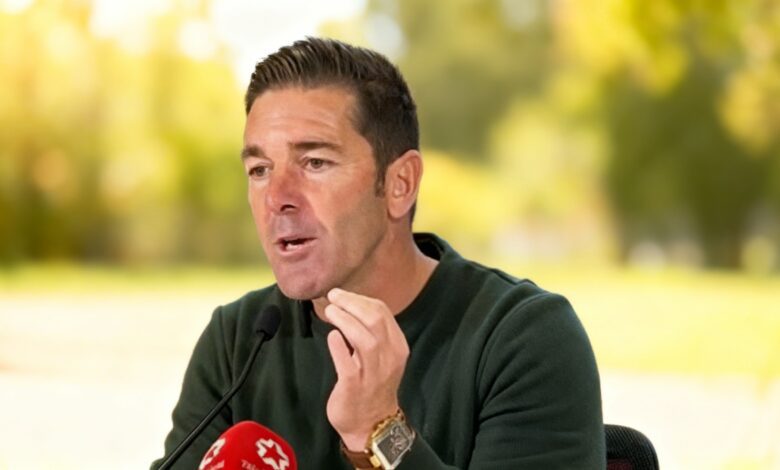
Two penalties awarded during injury time in the match between Antequera and Atlético Madrileño completely changed the course of the game and triggered a strong reaction from the visiting coaching staff. Abraham Paz, the head of Antequera, openly expressed his dissatisfaction with referee Roberto Gonzalo, who called both controversial incidents after regular time had ended. As a result, the team that had been confidently heading for victory lost to their opponent, raising questions about the objectivity of refereeing at the professional level.
The situation took on particular urgency because the second penalty was awarded in the 106th minute, at a time when Antequera was already leading. According to the coach, such decisions not only impact the outcome, but also undermine trust in the refereeing system in Spanish football. Abraham Paz emphasized that in his long career, he had never encountered such treatment of the team, and he saw the referee’s actions as a sign of disrespect to everyone associated with the club.
Reaction and consequences
Within the club, it is noted that this is not the first time refereeing decisions have gone against Antequera. According to the coach, the team has faced inexplicable decisions for several weeks, preventing them from achieving the results they deserve. He highlighted that the players and coaching staff work nonstop, and such incidents undermine all their efforts. The issue of respect for hard work and fair play became central to his post-match statement.
Abraham Paz also emphasized that there is no place for bias or having the color of a kit influence refereeing decisions in professional football. He expressed confidence that such situations undermine faith in fair competition and can demotivate players. The club believes such incidents require public discussion and a review of refereeing approaches.
A challenge for the system
The scandal surrounding the match between Antequera and Atlético Madrileño has sparked a discussion about wider issues in Spanish football. Many fans and experts point out that such incidents are not isolated, and that refereeing in Spain needs reform. Recalling other high-profile cases, parallels can be drawn to situations where the referees’ calls raised questions and influenced the outcomes of crucial games. For example, the recent injury to Barcelona’s goalkeeper was widely discussed in Spanish football and also became a turning point for the club — this case caused no less of a stir among fans.
When not only points are at stake, but also the future of players and coaches, every controversial episode takes on special importance. Antequera believes such situations cannot be ignored, otherwise trust in football as a fair competition will be undermined. Questions about referees and the VAR system are becoming increasingly relevant, and demands for transparency and accountability are growing more stringent.
The call for change
Abraham Paz emphasizes the need for respect towards the club, players, and fans. He believes that such incidents should prompt a serious discussion about the future of refereeing in Spain. The team is convinced that only open dialogue and reforms can restore trust in the sport and ensure fair conditions for all participants. Otherwise, according to the coach, football risks losing its appeal and meaning for the thousands of people who live and breathe the game.
Abraham Paz is a Spanish football coach and former professional defender, known for his principled stance and high standards for himself and those around him. Throughout his career, he played for several clubs in Spain, and after retiring as a player, he dedicated himself to coaching. His approach to football has always been marked by attention to detail and a commitment to fairness on the field. In recent years, he has been leading Antequera, earning respect among players and fans for his honesty and openness in assessing events.