Questions about the limits of school traditions and respect for family values have come to the forefront once again after a decision by a school in Navarra. This year, the administration of a primary school in Mutilva, located just a few kilometers from Pamplona, proposed an unusual way for 5th graders to celebrate Carnival. Girls were instructed to come in boys’ costumes, while boys were asked to wear braids and outfits traditionally associated with a female image. Parents learned about this from an official letter detailing the appearance requirements for the children.
The families’ reaction was mixed. Many expressed dissatisfaction that participation in the dress-up was not offered as voluntary. The letter made no mention of the possibility to refuse or choose an alternative. This sparked a wave of discussion in parent chats and on social media, where concerns were raised about pressure on children and the lack of choice.
Tradition and Change
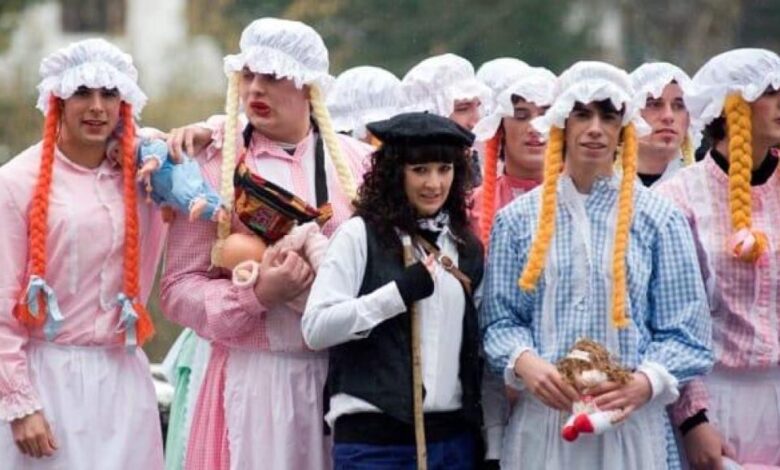
The school assignment is based on an old Basque tradition—the staged procession Inudeak eta Artzaiak, which translates from Basque as “wet nurses and shepherds.” In the original version of this ritual, common in Gipuzkoa and northern Navarre, each character keeps their own gender. However, in some regions, such as Vera de Bidasoa, a parody version has existed since the early 20th century, where adult men and women swap roles. Men dress up in women’s costumes with aprons, white bonnets, and fake braids, while women don shepherds’ outfits with hats and staffs. The school decided to recreate this particular version, but with children aged 10–11 as participants.
The letter sent to parents included photos for reference. One showed adult men in women’s costumes, another depicted women in men’s clothing. None of the photos featured children younger than teenagers. This also sparked debate among parents, who feel that such traditions are not always suitable for younger students.
Event organization
The school’s announcement provided detailed instructions on the students’ appearance. Girls were advised to wear a men’s suit or something similar: jeans, a vest, a shirt, a cap, and to bring a cane. Boys were encouraged to attend dressed in women’s clothing, with braids and a small doll. Additional costume elements such as headwear and braids would be supplied at the school. For parents whose children do not eat pork, an alternative dish was offered: fish instead of the traditional sausage. Gluten-free bread was also available for children with allergies or intolerances.
Organizers noted that on carnival day, students do not need to bring breakfast, as the parent committee would prepare treats for everyone. However, the lack of choice regarding the costumes sparked the main discontent. Some families believe that such initiatives should be strictly voluntary to avoid causing children discomfort or provoking conflicts within the group.
Public discussion
The situation in Mutilva is not unique to Spain. In recent years, the acceptability of school traditions involving costumes and role-switching has been a regular source of debate. Across different regions, parents and educators have had to find a balance between preserving cultural heritage and respecting students’ personal boundaries. Similar cases have already been discussed in Madrid and Catalonia, where disagreements also emerged around the mandatory nature of participation in traditional festivities.
In some schools, following complaints from parents, the administration reviewed their decisions and made participating in costumes optional. In other cases, the discussion led to a broader dialogue on the school’s role in shaping values and how to consider differing opinions in today’s society. The question of where the line lies between tradition and personal freedom remains open and continues to generate lively interest.