In the heart of Madrid, amid the green avenues of Retiro Park, stands a building that has become an emblem of the city. Its transparent walls and gleaming dome attract thousands of tourists, but few realize that behind this architectural marvel lies a story full of unexpected twists and forgotten European ambitions. The glass palace, now hosting contemporary exhibitions, was once conceived as an ode to technological progress and a symbol of a new era.
From the outside, the building appears light and airy, seeming to float above the pond’s surface. Yet its roots reach deep into the past, to a time when Europe was just discovering the potential of iron and glass. The inspiration for Madrid’s palace came from a grand project that stunned London in the 19th century and revolutionized construction.
An English Influence
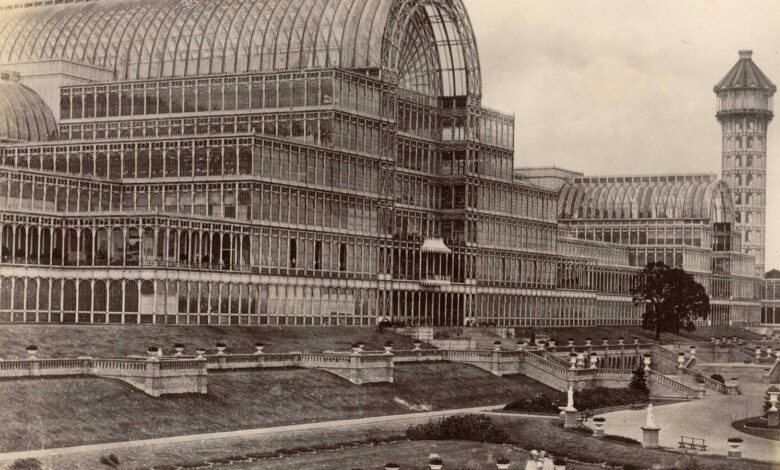
In 1851, a gigantic glass and metal pavilion rose in the capital of Great Britain, quickly nicknamed the Crystal Palace. Its creator, an engineer with an unconventional approach to architecture, proposed applying technologies previously used only in greenhouses. The result was a building nearly a kilometer long that sprang up before the eyes of an astonished public, with every detail carefully designed.
This London masterpiece not only hosted the first World’s Fair, but also became a symbol of the industrial revolution. Its design made it possible to create vast open spaces without massive walls, while light streaming through the glass panels filled the pavilion with a unique atmosphere. Shortly after the exhibition, the building was dismantled and relocated to another part of the city, where it stood until a tragic fire in 1936.
Spanish interpretation
Inspired by the success of the British project, Spanish architects set out to create their own monument to progress. In 1887, construction began in Madrid on a palace intended as the centerpiece of an exhibition dedicated to exotic plants from the Philippine Islands. Not only was the new building impressive in scale, it also blended harmoniously with the surrounding landscape.
The architect chose expansive glass surfaces for the facade, supported by elegant metal framework. Inside, the building resembled a tropical garden, with sunlight refracting through the glass to create fascinating patterns of light. Over time, the palace evolved from a simple greenhouse into one of the city’s leading cultural venues.
Modern significance
Today, the Glass Palace in Retiro is not just an architectural landmark, but also a hub of innovation. It hosts contemporary art exhibitions, installations, and performances that take advantage of the building’s unique space to create striking effects. Every visit feels like a discovery, with constantly changing exhibits and the building itself adapting to the spirit of the times.
However, the Madrid palace isn’t the capital’s only example of such architecture. In the Arganzuela district, another glass and metal building from the early 20th century has survived. Once serving industrial purposes for many years, it is now experiencing a new lease of life as part of the city’s cultural scene. Currently, it’s closed for renovation, but its story is no less fascinating.
Legacy and influence
Although the original Crystal Palace in London has long vanished, its spirit lives on in Madrid. The Spanish version not only preserves the aesthetic and principles of its British predecessor but also has developed its own identity. Today, the site inspires artists, architects, and curious visitors looking for something beyond the city’s standard tourist trails.
The influence of the London masterpiece can be felt across Europe, where architects continue to experiment with metal and glass. But it was the Madrid palace that became a symbol of how ideas can transcend borders and eras, leaving behind not just striking buildings but entire layers of culture.
If you didn’t know, the architect of the Madrid palace—Ricardo Velázquez Bosco—is considered one of the leading innovators of his era. His work was marked by bold engineering solutions and meticulous attention to detail. Today, the glass palace is protected by the state and is one of the most visited attractions in Madrid. Exhibitions are regularly held here under the auspices of the Reina Sofía Museum, and the building itself has become an integral part of the city’s cultural life.