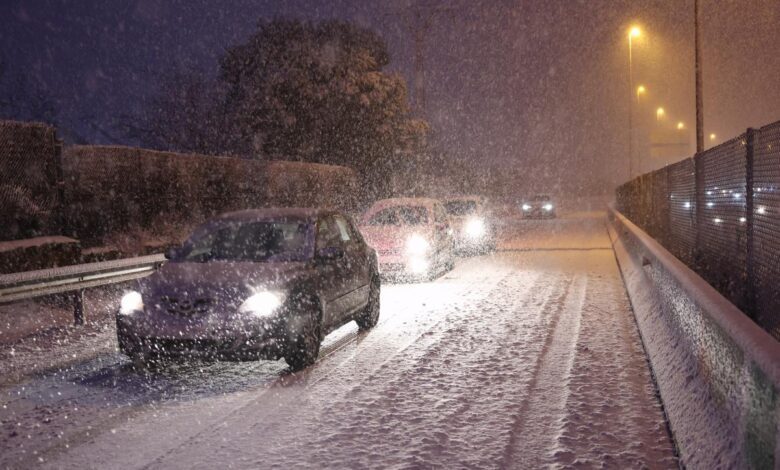
A powerful blow from nature has once again reminded Spaniards of how vulnerable the country’s transportation system is in the face of extreme weather. Over the past 24 hours, residents of several regions have encountered unexpected difficulties: familiar routes have become inaccessible, disrupting the plans of thousands of people. For many families and businesses, this situation means not only delays but also direct financial losses, as travel on key roads has become impossible.
Particular concern surrounds the situation in Andalucía and Madrid, where heavy snowfall and torrential rain have effectively paralyzed transport. Authorities were forced to suspend classes in schools, while road crews worked through the night to clear at least the main highways. However, by morning, the number of affected roads had only increased, leaving many drivers trapped by the severe weather.
Roads under threat
According to the latest data, 90 roads across Spain have been affected. Of these, 67 are covered in ice and snow, making travel extremely dangerous. Another 23 secondary roads are fully or partially closed due to widespread flooding. Drivers are forced to look for alternative routes or abandon trips altogether to avoid risks to their safety.
Traffic remains tense on major highways. Special driving conditions have been introduced on certain sections of the AP-6, A-52, and A-23 roads: only cautious movement is permitted, and overtaking trucks and heavy vehicles is strictly forbidden. This is a necessary measure to prevent further accidents and congestion that could worsen the already difficult situation.
An Ordeal for Madrid
Residents of the capital woke up to conditions more typical of Northern Europe than the usual Madrid winter. Snowfalls and heavy rains have turned city streets into obstacle courses: many roads are completely blocked, and on others, driving is possible only with special tire chains. For municipal services, this has become a real test—snow removal and efforts to deal with the aftermath of the weather are ongoing around the clock.
Drivers caught on the roads at this time are sharing photos and videos of snowbound highways, where cars are stuck in drifts or unable to get past icy stretches. In some parts of the city, traffic has come to a near standstill, and public transportation is operating intermittently. For many residents, this has become an unexpected ordeal for which few were prepared.
Flooding in Cádiz
The situation is especially severe in the province of Cádiz, where 15 roads are completely closed due to heavy rains. Floodwaters have submerged not only the roads but also bridges, and some communities have been cut off from the outside world. Drivers have to wait for the water level to recede before road services can restore access.
Travel problems have also arisen in other regions: Málaga, León, Girona, Cáceres, Ourense, and Badajoz have reported cases of complete road closures due to flooding. In some areas, a ‘red alert’ has been declared, meaning all traffic is halted and even emergency services are barred from entry.
Snow traps
The mountain areas have not escaped the snowfall either. In Sierra Nevada and Granada, several roads are buried under a thick layer of snow and have been closed to traffic. Teruel, Zaragoza, Asturias, Cáceres, Castilla y León, and Navarra have also seen numerous road closures due to snowdrifts.
On certain sections, a ‘red alert’ is in effect—chains are mandatory, and on some roads, only passenger cars are allowed through. Drivers are advised to check the condition of their route in advance and be prepared for unexpected delays. In some cases, even these precautions are not enough: vehicles get stuck, and help can take hours to arrive.
Restrictions and warnings
Amid ongoing severe weather, road services and authorities are urging residents to avoid traveling unless absolutely necessary. Special restrictions are in place on dozens of roads: overtaking is prohibited, speed limits have been reduced, and on some sections, driving is permitted only with snow chains. Drivers are advised to closely monitor updates and not to take unnecessary risks if their route passes through affected areas.
The situation remains tense, and it is still unclear when traffic will be fully restored. For many Spaniards, this incident served as a reminder of how quickly daily life can change under the force of nature. Further updates on road conditions and possible changes to transport schedules are expected in the coming days.