The issue of affordable housing in Madrid is once again in the spotlight. Despite large-scale efforts to eradicate slums, the city is facing a new wave of informal settlements. This trend not only affects social stability, but also impacts the image of the capital, highlighting inequality and the vulnerability of certain segments of the population.
A surge in slums
In the late 1960s, Madrid was literally surrounded by makeshift homes. No matter which road residents took to leave the city, they were met by seas of shacks made from fabric, tin and clay. The largest settlements—Pinar de Chamartín, Los Focos, Puente de Vallecas and Caño Roto—sheltered hundreds of thousands of people, most of whom came from rural areas in search of a better life.
During those years, industry developed faster than the city’s infrastructure. Madrid couldn’t build enough housing for the influx of workers. Thousands of people reached the outskirts on foot or by cart, putting up a roof over their heads overnight. If their house wasn’t ready by dawn, it would be demolished by the Civil Guard. Every settlement had its own master builders who made a living from this, while newcomers often went into debt for any kind of shelter they could get.
However, not all slum residents were migrants from the countryside. After the Civil War, many Madrileños were left homeless. Particularly hard hit were neighborhoods through which the front lines passed, such as Usera. There, people were forced to settle wherever they could, often living in severe poverty and neglected by the authorities.
Life on the outskirts
Memories of life in such neighborhoods are filled with details that are hard to imagine today. Homes had no toilets, running water, sewage system, or paved streets. People used tin cans instead of toilets, and mud and dampness were constant companions. Slum residents worked in the city center, but to avoid standing out, they would change shoes at Atocha station, hiding their dirty boots in bags.
Rain would turn the streets into impassable mud, and stains on clothes and skin betrayed their origin. Authorities were in no hurry to address the problem: the Franco regime needed cheap labor but offered no real solution for the poorest residents. Housing programs targeted those who could afford even a small payment, but not those living in dire poverty.
In some neighborhoods, such as Lavapiés, real estate speculation forced people to leave their homes and move to makeshift shelters. Authorities preferred to ignore the existence of these settlements, and any contact with residents was limited to repression.
Mass relocation
The situation began to change only after the dictator’s death. Activists and community movements played a key role, fighting for their rights for years. Thanks to their efforts, the late 1970s and early 1980s saw the launch of the largest relocation program in Spain’s history.
As part of the so-called ‘Neighborhood Renewal Operation,’ dozens of settlements were demolished and over a million people were provided with new housing. Historic slums, such as Colonia de la Cruz Blanca and others in the Puente de Vallecas area, disappeared from the city map. Residents were relocated to new homes, including the iconic El Ruedo building, which became a symbol of change.
By the end of the 20th century, it seemed the problem was solved. According to official sources, by 1999 only about a hundred shacks remained in Madrid, mostly in the Cañada Real area. Hidden from most city dwellers, this district became not only the last stronghold of slums but also the largest illegal drug trafficking hub in the capital.
The problem returns
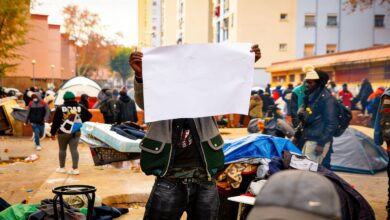
In recent years, the situation has once again escalated. Amid new construction projects and rising housing prices, slums are appearing in unexpected places—not on the outskirts, but near busy highways and in hard-to-reach areas along the M-30. Small clusters of shacks spring up and disappear quickly, but the issue persists.
Authorities have promised a radical solution, yet the number of informal settlements continues to grow. City hall data indicates that there are now nearly a hundred such pockets scattered across various districts: Moratalaz, Vallecas, Villaverde, Vicálvaro, Chamartín, Fuencarral-El Pardo, Tetuán, Carabanchel, and others.
The composition of residents in the slums has also changed. While in the 1980s almost everyone belonged to the Romani community, now a significant portion are migrants from the Maghreb countries and sub-Saharan Africa. There are also Spaniards, not of Romani origin, who have been forced there by high housing costs. In some areas, for example, under the Puente de Vallecas overpasses, dozens of homeless people are forced to live in the open air, sheltering from the rain under makeshift awnings.
New faces and challenges
The stories of today’s slum dwellers are often full of despair. For example, 39-year-old Adrian from Romania was forced to urgently move to a tiny patch of park after another eviction. His home is nothing more than a blue tarp and a tent. He admits that he is a nuisance to those around him, but he has no other choice. Authorities carry out regular raids, but the problem does not go away—it just moves from place to place.
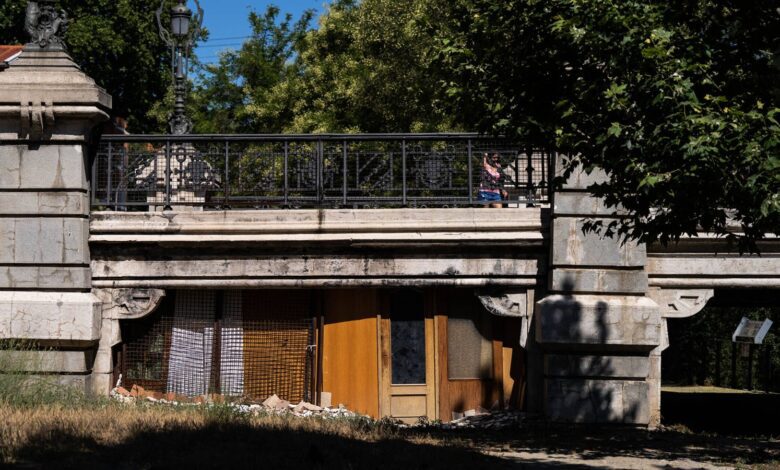
In recent months, as measures to control illegal settlements have tightened, many residents have been forced to seek new shelter. Some move to parks, others to abandoned buildings or under bridges. Social services are not always able to respond quickly, and the number of people in need is growing.
In this context, it is worth recalling how recently the Spanish government adopted emergency measures to legalize migrants. This decision sparked heated debate and became a widely discussed topic in society. You can find out more about the reasons and consequences of this step in our material at this link.
According to recent studies, most new residents of slums are people who find themselves in vulnerable situations due to economic hardship. At the same time, the social structure of these settlements is becoming increasingly complex, making it difficult to find universal solutions.
In recent years, the issue of informal settlements and their impact on the urban environment has been repeatedly raised in Spain. Barcelona and Valencia have also seen spikes in the emergence of makeshift dwellings, especially amid rising rental prices and an influx of migrants. Authorities in various cities are trying different approaches, from mass relocations to targeted social programs. However, none of these measures has yet led to the complete elimination of the problem. Experts note that without a comprehensive housing policy and integration of vulnerable groups, the situation may only worsen. In the coming years, the issue of slums and informal settlements is likely to remain one of the most pressing topics for major cities in the country.