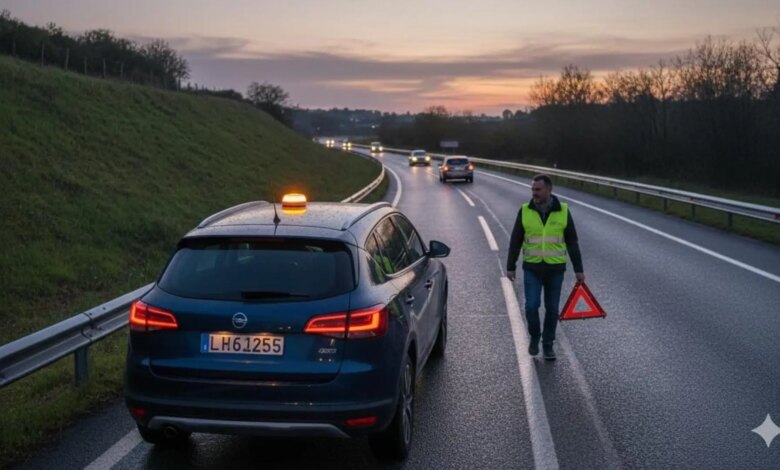
A major change is approaching for all drivers in Spain: starting January 2026, the familiar emergency warning triangles will give way to modern V16 light devices. This new rule is raising many questions among motorists, as many are reluctant to part with the safety tools they’ve always relied on. However, regulations are tightening, and ignorance could result in fines.
The V16 warning lights, equipped with a communication system, will become the only officially sanctioned way to signal an emergency stop or breakdown on the road. The triangles, which for many years were a mandatory part of every vehicle, will soon be illegal. Drivers will have to adapt to the new requirements to avoid unpleasant consequences.
Transition period
Until the end of 2025, motorists can use both triangles and the new V16 devices. This allows for a gradual adjustment and time to prepare for the mandatory switch. Nevertheless, it’s a good idea to consider purchasing a certified beacon now to avoid trouble on the road.
The issue of whether triangles and V16 devices can be used simultaneously remains unresolved. Authorities have not yet provided a clear answer on whether both can be displayed together to increase visibility. However, starting in 2026, triangles will no longer have legal status, and their use could be considered a violation.
Fines and penalties
According to the new regulations, not having a V16 device in your car after January 1, 2026, is equivalent to not having warning triangles previously. This violation carries a fine of up to €80. If a driver ignores the requirement and fails to mark an emergency stop using the V16, traffic police have the right to issue a citation.
Moreover, violating other safety requirements, such as leaving your vehicle without a high-visibility vest, can be much more costly. This offense is punishable by a €200 fine and a loss of four points from your driving license. It’s important to remember that these new regulations are aimed at reducing the number of road accidents.
Reasons for the changes
The main goal of introducing the V16 is to improve driver and passenger safety. Experts believe that having to step onto the roadway to set up warning triangles creates additional risk, especially on highways. The new devices allow you to signal an emergency stop without leaving your vehicle.
Spain’s road authority (Dirección General de Tráfico, DGT) emphasizes that the V16 Connected is a step forward for road safety. More than 25 million vehicles must be equipped with these devices, which are recommended to be kept in an easily accessible place, such as the glove compartment. Failing to have a certified beacon can result in a fine.
What drivers need to do
Drivers are advised to purchase an approved V16 model in advance to avoid last-minute rushes and shortages. When choosing a device, it is important to ensure that it meets all standards and is listed in the official registry. Using uncertified beacons not only won’t protect you from fines, but may also cause additional issues.
The transition to the new regulations is more than a formality—it’s a real step toward reducing accidents. It’s important to stay informed about legislative updates and adapt to changes in a timely manner. Only then can you ensure safety for yourself and others on the road.
In case you didn’t know, Dirección General de Tráfico (DGT) is Spain’s main government agency responsible for road safety and monitoring compliance with traffic laws across the country. DGT develops and implements new standards, such as the mandatory use of V16 devices. The agency regularly conducts information campaigns and updates regulations to improve safety for all road users.