The possible participation of Spain in an international security mission in the Strait of Hormuz has become a topic of discussion amid rising tensions in the region. For Spaniards, this signals a potential change in the country’s role in global conflicts and brings new challenges for national security. Decisions being made now could impact Madrid’s economic interests and political position in the coming years.
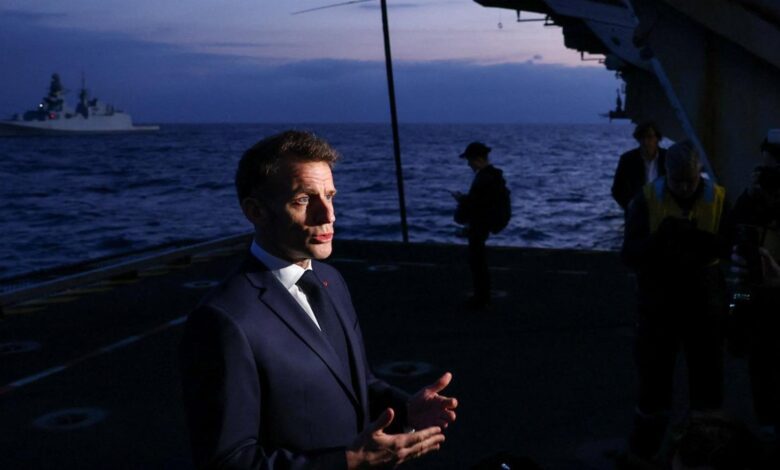
Official representatives of the Spanish government have stated that they have not received clear proposals from France regarding the deployment of the frigate ‘Cristóbal Colón’ to join the international fleet initiated by Emmanuel Macron. At present, this ship is escorting the French aircraft carrier ‘Charles de Gaulle’ in the Mediterranean Sea, following its recent redeployment from the Baltic. Spanish officials emphasize that any decisions will be made only after receiving specific requests and thoroughly analyzing the situation.
Madrid’s cautious approach
Madrid is showing restraint regarding military involvement, particularly in light of the escalating conflict in the Middle East. According to government sources, France’s initiative is being considered as a possible step after the most acute phase of confrontation in the region. Spain is in no hurry to take an active role, preferring to act as a mediator and advocate for diplomatic solutions within the European Union framework.
At the same time, Spanish military forces are already taking part in a mission to protect Cyprus, with ‘Cristóbal Colón’ providing coastal security for this EU member state. The operation is led by a French aircraft carrier, which was deployed to the Mediterranean after the US attack on Iran. According to russpain.com, such coordination among European countries is becoming increasingly significant amid instability in the region.
Response to EU statements
Statements by Emmanuel Macron on preparations for an international mission in Hormuz coincided with a speech by European Commission President Ursula von der Leyen, who supported US actions against Iran and spoke about shaping a new world order. Spanish diplomats viewed these remarks critically, believing that such important decisions should be discussed with consideration of the positions of all EU member states. Madrid and Rome advocate for a more restrained approach to prevent further escalation.
Within the European Union, divisions over military intervention are becoming increasingly apparent. Spain insists on the need for collective discussion and respect for the core principles of the union. Recalling a recent case when Spanish authorities refused to meet with an EU delegation, which caused discontent in Brussels, it is worth noting that such episodes have already affected relations between Madrid and European institutions.
Economic and strategic risks
The Strait of Hormuz remains a key route for global oil and gas trade. After a joint operation by the US and Israel, Iranian authorities imposed restrictions on vessel movement, raising concerns about the stability of energy supplies. For Spain, as for other EU countries, any disruptions in this region could lead to higher prices and economic difficulties.
The issue of expanding military presence in Hormuz is tied not only to security but also to political risks. Participation in such missions may change how Spain is perceived internationally and spark internal debates about the country’s role in global conflicts. At the same time, the government emphasizes that any decision will be made with regard to national interests and the positions of its allies.
In recent years, international missions to ensure the security of maritime routes have come under discussion in the EU multiple times. For example, anti-piracy operations off the coast of Somalia or joint patrols in the Mediterranean have shown that coordination between countries takes time and requires alignment of interests. Such situations often lead to disagreements within the union, especially when it comes to military intervention in unstable regions. The question of Spain’s role in such initiatives remains open and depends on the next steps taken by European partners.