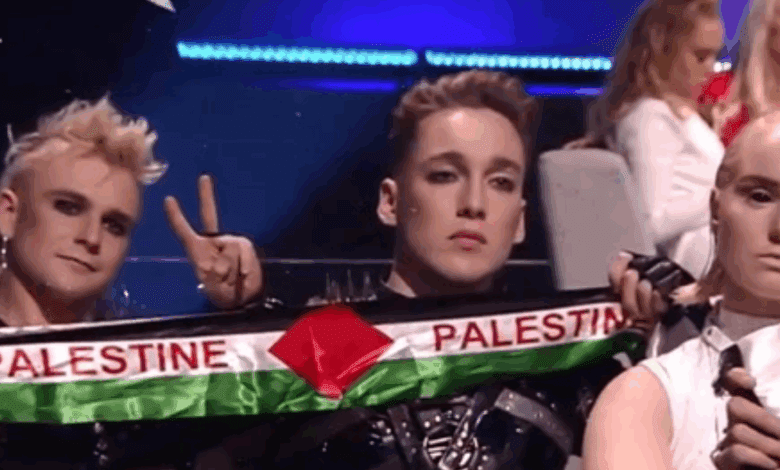
Spain has officially announced its decision to withdraw from the Eurovision Song Contest 2026. The decision came immediately after it was revealed that Israel would once again participate, despite numerous calls for its exclusion due to military actions in the Gaza Strip. Iceland, Ireland, Slovenia, and the Netherlands have also joined the boycott. As a result, the number of countries refusing to participate has reached five.
The Spanish broadcasting corporation confirmed that the decision was made after discussions at the highest level. The statement notes that the participation of Israeli broadcaster Kan in the contest sparked serious disagreements among both members of the European Broadcasting Union (EBU) and viewers. Spain had previously expressed doubts about taking part, but the final decision was made just hours before the deadline for applications for the jubilee 70th contest, which will be held in Austria next May.
Europe’s reaction
This year, the European Broadcasting Union refused to hold a vote on Israel’s participation, opting instead to introduce new rules aimed at preventing government interference in the contest. Representatives of the British broadcaster said they support the collective decision of the EBU members, emphasizing the importance of inclusivity and adherence to established rules. The Irish side called Israel’s participation ‘unacceptable in light of the tragic events in Gaza’ and reaffirmed its commitment to the boycott.
Israel’s presence at Eurovision has been a source of tension for years. The military actions in Gaza and allegations of attempts to influence the public vote have increased pressure on organizers. Additional measures were introduced to protect the transparency of voting; however, representatives from Iceland and Spain questioned their effectiveness and demanded that the Israeli broadcaster be excluded from the list of participants.
Background
Last week, Spain became the first major country to withdraw from the contest after its representatives unsuccessfully sought a vote on Israel’s admission. Ireland, Slovenia, and the Netherlands soon followed suit. All of them stated that they could not participate in the competition while Israel remains among the contestants.
Israel has participated in Eurovision since 1973, as its national broadcaster Kan is a member of the EBU. During this time, the country has won four times, most recently in 2018, and finished in second place in 2025. Meanwhile, Russia was excluded from the competition after the events of 2022 related to Ukraine, which also sparked heated debates about double standards in participant selection.
The Future of the Contest
Eurovision organizers have found themselves in a difficult position: on the one hand, they strive to maintain openness and inclusivity, but on the other, they face pressure from participating countries and the public. The introduction of new rules was not enough to prevent a wave of boycotts, and now the fate of the 2026 contest remains uncertain. For the first time in many years, several countries have declined to participate for political reasons, which could impact both the format and public perception of Eurovision moving forward.
It is still unknown whether other countries will follow the example of Spain and other nations. However, it is already clear that the decision to allow Israel to participate has become one of the most controversial in the contest’s history, and the reaction from European countries shows just how sensitive issues of politics and humanitarian values are, even in the realm of music.