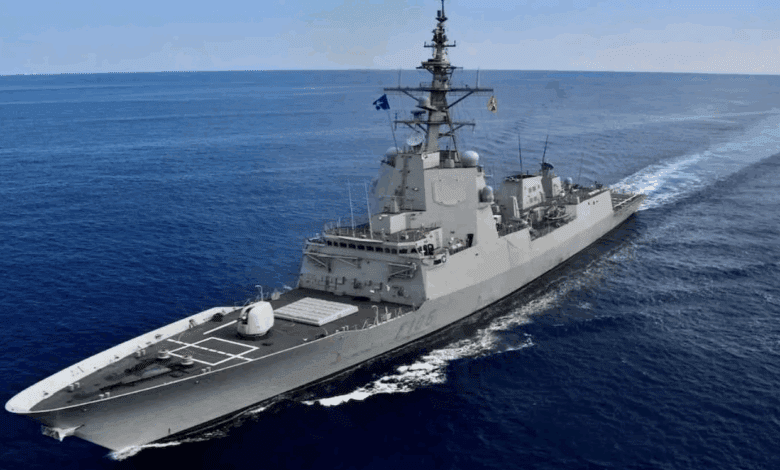
Madrid’s decision to deploy the frigate Cristóbal Colón to the shores of Cyprus was an unexpected move that has already sparked discussion among European allies. For Spain, this step signifies not only solidarity with Cyprus but also a demonstration of independence in security matters, especially against the backdrop of tensions in the Eastern Mediterranean. With the growing threat posed by drones and missiles, the Spanish government aims to show that it is ready to defend the interests of its European partners, without waiting for instructions from other powers.
According to El Espanol, the deployment of the frigate was in response to a direct request for assistance from Cyprus after a drone, reportedly of Iranian origin, crashed on the island. Spain decided to act within the framework of the European Union, rather than NATO, since Cyprus is not a member of the alliance. Significantly, coordination took place solely among European countries—France, Italy, Greece, and Spain. The US was not informed about the mission, and their participation was not contemplated. This underscores Madrid’s new approach to defense and international commitments.
European coordination
The frigate Cristóbal Colón, which had previously been in the Baltic Sea, is now heading to Cyprus to reinforce security in the island’s airspace. Alongside the French aircraft carrier and ships from other EU countries, the Spanish vessel is expected to arrive off the coast of Cyprus around March 10. According to El Espanol, the decision to redeploy was made swiftly, without lengthy consultations, made possible by close coordination between the defense and foreign ministries of EU countries.
Unlike the United Kingdom, which has a military base in Cyprus and is a NATO member, Spain is acting solely at the request of Cyprus and in the interest of European security. London has not requested additional support, while Cyprus, on the contrary, appealed to the EU for help to reassure the public and prevent possible new incidents. Madrid emphasizes that this is not a military operation against Iran, but a preventive measure to protect an ally.
Political differences
The decision by Pedro Sánchez’s government has faced domestic criticism. Some political groups, particularly Podemos, believe that sending the frigate could be seen as interference in the Middle East conflict. However, officials insist that the mission is strictly defensive and not connected to supporting military action against Iran. According to government representatives, if Spain were truly involved in the war, it would either participate in attacks or provide its bases for US operations, which has not happened and is not planned.
Madrid also responded to statements by White House press secretary Karoline Leavitt, who claimed that Spain had changed its stance and is now taking part in military action. Spanish authorities refuted these remarks, emphasizing that the decision regarding the frigate was made without consulting Washington. Foreign Minister José Manuel Albares and Defense Minister Margarita Robles expressed dissatisfaction with such interpretations, noting that the US was not involved in the decision-making process.
Comparison with Other Missions
Officials are drawing parallels between the current mission and previous operations, when Spanish military units were deployed in the Baltic states or Turkey to protect NATO allies amid the conflict in Ukraine. In both cases, Spain did not participate in combat but provided security for its partners. Italy has taken a similar stance: Prime Minister Georgia Meloni stated that the country is not involved in the war and does not intend to become a participant, despite sending its ships to Cyprus.
In this context, it’s worth recalling how recently Spanish Prime Minister Pedro Sánchez publicly criticized US policy, which sparked wide debate across Europe. Details of this conflict and its potential implications for Spain’s international role can be found in the material on European leaders’ reaction to Sánchez’s position.
Context and consequences
The frigate Cristóbal Colón is set to arrive at Cyprus as part of a European fleet led primarily by France. According to Ale Espanol, the mission aims to strengthen trust among EU countries and demonstrate Europe’s ability to respond independently to threats. With the situation in the Middle East remaining tense, such steps could serve as an example for other nations in the region.
In recent years, European countries have increasingly taken decisions on military missions without the involvement of the US or NATO. For instance, in 2024, France and Germany coordinated joint patrols in the Eastern Mediterranean following a series of drone incidents. In 2025, Italy increased its presence in the region by deploying additional vessels to protect trade routes. These actions demonstrate Europe’s drive for greater independence in security matters and its readiness to respond swiftly to new challenges.