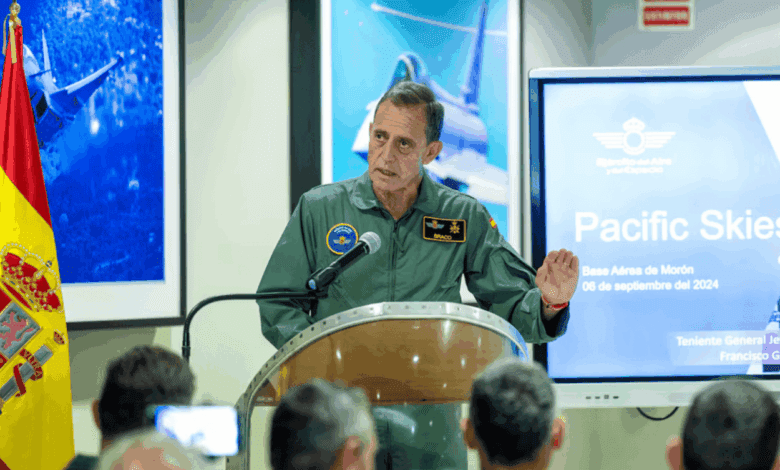
Spanish military officials are taking space security seriously. General Francisco Braco, head of the Air and Space Forces, has stated that space can no longer be viewed solely as a zone of cooperation. It is now considered a potential battlefield, where not only satellites but also weaponry capable of disabling critical communication and navigation systems are being deployed in orbit.
According to the general, there are currently no missile platforms in space, but the threat posed by so-called “kamikaze satellites” and devices that create electromagnetic interference is becoming increasingly real. Such technologies can paralyze enemy satellites, which could have serious consequences for any country.
Space infrastructure
In response to these new challenges, Spain is launching a series of projects to protect its interests in orbit. One of the key initiatives is the NEMO satellite, which will serve as a kind of “space police officer.” Its mission will be to prevent attacks on Spanish assets in space. Additionally, programs are underway to create a network of robotic observatories (RORCOBE), purchase a modern radar system for tracking objects in orbit, and develop a simulator to model orbital processes. All of these efforts are connected to the formation of the future European space shield.
Since March 2023, the country has had a Space Command responsible for monitoring objects in orbit, predicting possible falls, and analyzing space weather. Specialists also monitor the status of satellite navigation systems to promptly detect malfunctions caused by both natural and artificial factors.
Technology and Modernization
General Braco noted that over the past year, Spain’s space monitoring capabilities have grown significantly. This progress was made possible by the upgrade of the S3TSR radar, installed at the Morón de la Frontera base in Seville, and the launch of a new orbital situation monitoring and analysis system (CCSE).
At the same time, military bases are being prepared for possible crisis scenarios. If faced with a threat, aircraft will be dispersed to various locations across the country: from Santiago and León to Málaga, Tenerife, and Lanzarote. Storage facilities for weapons and ammunition are already under construction at these bases to ensure a rapid response if needed. In particular, a new arsenal is being built in Mallorca.
Military Aviation
In the coming years, Spain’s Air Force is set to expand. As early as 2026, the first three Eurofighter jets will be delivered to replace the aging F-18s at the Gando base (Las Palmas). The arrival of three new C295 maritime patrol aircraft is also expected. The fleet of A400M transport planes has been increased to 17 units, although part of this fleet is planned for sale to a third country, as previously agreed with Airbus.
The general expressed confidence that the FCAS program, despite disagreements between France and Germany, will continue to move forward. A solution is expected to be found by the end of the year that will allow the project to enter its next phase.
International Cooperation
Spain is not only strengthening its own defense but is also actively involved in international missions. Currently, 11 F-18 fighter jets are stationed on NATO’s eastern flank in Lithuania, along with an A400M tanker aircraft on permanent standby. Part of this contingent is participating in Operation Centinela Oriental, launched after incidents involving Russian drones in Poland last fall. Initial plans to deploy the fighters to Poland were later revised.
In 2025, Spanish Eurofighters will once again head to Australia for joint exercises with the German Air Force. In addition, the ASPA aerobatic helicopter team will visit Brazil, Uruguay, and Argentina to mark the centenary of historic flights, which will begin on January 22 with the Plus Ultra journey.