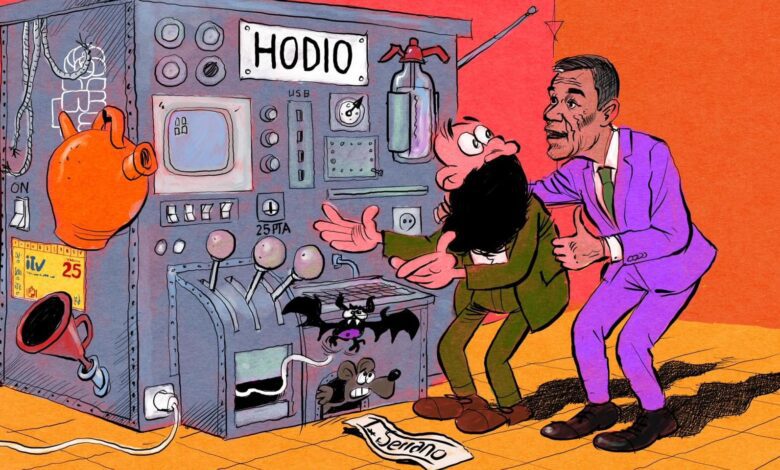
The Spanish government is launching a large-scale initiative to monitor the spread of hostile speech on social media. The new system, developed under the leadership of Minister Elma Saiz, will publish a ranking of platforms every six months based on the recorded levels of hate and polarization. This decision could transform the approach to regulating the digital space and affect millions of users across the country.
Authorities explain that the project’s goal is to track the dynamics and scale of aggressive messages in order to compare how different social networks are exposed to such phenomena. To achieve this, the Hodio tool has been created, operating under the Observatorio Español del Racismo y la Xenofobia (Oberaxe), which is part of the Ministry of Inclusion. The system combines quantitative analysis with expert evaluation to ensure the accuracy and objectivity of the final data.
How Hodio will work
Every six months, a team of specialists from Oberaxe will publish an updated ranking reflecting the level of hostility on popular platforms. Hodio not only records the number of aggressive messages, but also tracks their spread and impact on users. Data is gathered using both automated methods and manual content review. According to the developers, this approach allows for a nuanced assessment and helps avoid errors that come from one-sided evaluation.
The Hodio system complements the existing FARO project, which has been monitoring racist and xenophobic statements since last year. Within FARO, eight employees analyze posts on Facebook, Instagram, YouTube, and X daily, identifying the most dangerous messages and initiating their removal. In January 2026 alone, more than 35,000 cases were detected, of which over half were taken down following observers’ complaints.
Response from society and politicians
The introduction of the rating sparked a heated debate among politicians and experts. Prime Minister Pedro Sánchez emphasized that the new system will hold social media owners accountable, especially in light of the surge in aggressive remarks after moderation was reduced on X, owned by Elon Musk. According to him, since the change of ownership, the number of such posts has increased by 50%.
The opposition, particularly Partido Popular leader Alberto Núñez Feijóo, argues that the government initiative only deepens polarization, while Vox leader Santiago Abascal accuses the authorities of attempting to censor and control public opinion. Experts are divided: some see Hodio as a tool to pressure platforms, others fear the possibility of ideological bias in content evaluation.
Impact on users and platforms
Digital reputation experts note that the introduction of a rating system could increase pressure on social networks, prompting them to take a more active role in combating hate speech. However, some specialists believe that to really reduce aggression levels, it is necessary to tighten user identification rules, as anonymity fuels growing polarization. The government does not currently plan to introduce such measures but is discussing restrictions for minors.
In light of these new initiatives, it’s worth recalling that authorities have previously taken steps to analyze online aggression. For example, the implementation of a system to monitor hostility levels on Spanish social networks became one of the first such solutions in Europe, sparking widespread public debate and discussion about possible implications for freedom of speech.
In recent years, Europe and Spain have seen increased attention to the issue of digital aggression. In 2025, several EU countries introduced similar monitoring systems, while Germany and France are discussing bills for stricter online content regulation. In Spain, efforts to combat hostile messages are a frequent topic of debate, especially following high-profile cases of fake news and online harassment. The government’s new initiatives could set an example for other countries seeking a balance between freedom of expression and protecting users from aggression.