Amid instability in the global oil market caused by the conflict in Iran and the blockade of Hormuz, Spain has been forced to urgently tap into its strategic fuel reserves. This decision directly affects the country’s energy security and could shift the balance of power between the state and the private sector. Authorities have approved the release of 400 million barrels of petroleum products to the market over 90 days to cushion the impact of supply disruptions and stabilize domestic prices.
Spain’s reserve storage system is complex: the state organization CORES (Corporación de Reservas Estratégicas de Productos Petrolíferos) controls only a portion of the reserves, with the rest managed by private companies. According to RUSSPAIN, CORES is responsible for 42 days of reserves, while another 50 days are held by the industry. Most reserves are stored in private facilities across the country, raising additional risks and questions about the transparency of management.
Private storage facilities and state interests
In recent months, CORES has held tenders to lease new fuel storage facilities, aiming to redistribute reserves among regions. For instance, in February, the agency launched a tender for storing nearly 200,000 cubic meters of diesel at the Repsol plant in Puertollano (Ciudad Real), and in December for 192,000 cubic meters of crude oil in Cartagena (Murcia). All major wholesale suppliers of petroleum products and liquefied gas are part of CORES, with Hafesa Energía standing out for rebranding as Haxx in 2025.
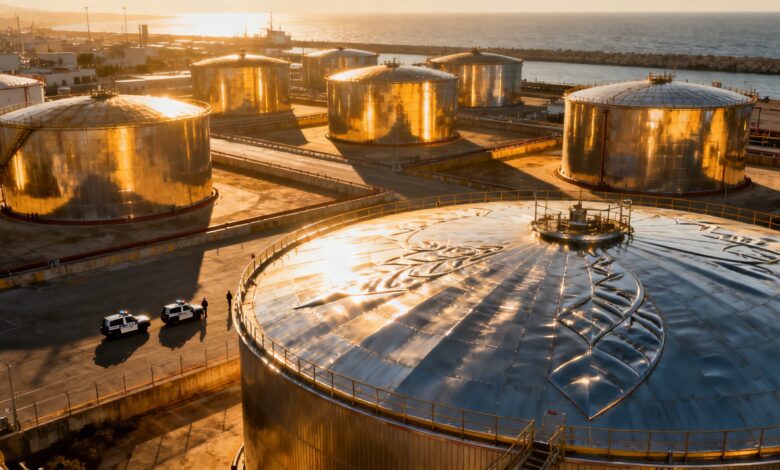
Haxx manages its subsidiary Petróleos Asturianos, which owns the country’s largest fuel storage facility at the port of El Musel (Gijón). Six giant tanks here can hold up to 240,000 cubic meters, enough to supply Spain’s gasoline and diesel needs for two days. CORES has leased these capacities since 2008, though contract details remain undisclosed.
Scandals involving reserve owners
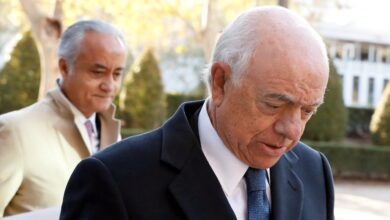
The majority shareholder of Haxx, Basque businessman Alejandro Hamlyn, has become embroiled in high-profile legal proceedings. He is accused of tax evasion and participating in a criminal group linked to the so-called ‘gasoline mafia’. According to court records, the damage to the state exceeded €154 million. Hamlyn resides in Dubai and has not appeared at hearings, citing a travel ban due to outstanding debts. Spanish authorities are seeking his extradition, but the process has stalled due to the emirate’s legal specifics.
Last year, Hamlyn’s name surfaced in the media after a videoconference with former PSOE employee Leire Díez and businessman Javier Pérez Dolset. They discussed potential prosecution concessions in exchange for compromising information about law enforcement officials. Díez is currently facing charges of corruption and influence peddling, and scrutiny over Hamlyn’s business transparency continues to grow.
Geography and scale of reserves
In addition to Gijón, Haxx owns warehouses in Motril, Bilbao, Cartagena, Ferrol, Toledo, and Málaga. The total capacity exceeds 660,000 cubic meters. In Cartagena, the Escombreras terminal holds 110,000 cubic meters, Málaga — 40,000, DBA Motril Port — over 106,000, Ferrol — 90,000, Bilbao — 63,000, and Toledo — just over 10,000 cubic meters. This distribution allows for flexibility in responding to supply disruptions, but also increases the state’s dependence on private operators.
CORES is forced to sign long-term lease agreements with infrastructure owners to ensure the storage of strategic reserves in five key regions: the North, Levante, Center, South, and Canary Islands. At the same time, CORES’s own facilities remain limited, highlighting the importance of cooperating with the private sector—despite the risks involved.
Context and recent developments
In recent years, Spain has already faced the need to use its strategic fuel reserves. For example, in 2022, after a sharp rise in oil prices due to geopolitical conflicts, the authorities took measures to release part of the reserves to stabilize the market. Then, as now, private companies controlling large warehousing facilities played a key role. Such decisions always spark debates about transparency and oversight, as well as how effectively the government can manage critical resources during crises.