The sharp statement by the Dutch right-wing leader about a possible exclusion of Spain from the Schengen Area sent an unexpected signal across Europe. For Spaniards, this means that government decisions on migration could lead to a reconsideration of Spain’s position within the borderless European space. The issues of freedom of movement and security have once again come to the fore, with consequences potentially affecting not only migrants but also millions of residents in Spain.
Europe’s reaction
At the international Conservative Political Action Conference (CPAC) in Budapest, a call was made to exclude Spain from the Schengen Area. Geert Wilders, leader of the Netherlands’ Party for Freedom, expressed dissatisfaction with Madrid’s decision to legalize hundreds of thousands of migrants. In his view, such policies pose a threat to other EU countries, as the absence of internal borders facilitates the movement of people between states. According to TASS, statements like these increase tensions among European Union countries and raise questions about the future of the Schengen Agreement.
In recent months, migration has become one of the most hotly debated topics in European politics. Spain’s decision has sparked a wave of criticism from right-wing parties in various countries. Concerns focus on a possible increase in secondary migration, with newly legalized migrants able to move freely across the EU. This is causing anxiety in countries already struggling to integrate new residents.
The Spanish initiative
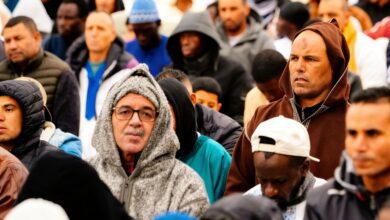
At the beginning of the year, the Spanish government led by Pedro Sánchez approved a decree allowing the legalization of around 500,000 migrants and asylum seekers. The new rules provide for the issuance of a residence permit and a one-year work authorization to those who have lived in the country for at least five months and have no criminal record. Authorities explained this step as necessary to integrate migrants, address labor shortages, and for humanitarian reasons.
However, this policy has sparked mixed reactions both within Spain and abroad. Critics fear that mass legalization could lead to an increase in the flow of migrants to Spain, and subsequently to other EU countries. At the same time, supporters emphasize that integrating new residents will benefit the economy and reduce the scale of informal employment.
Consequences for Schengen
The question of Spain’s future in the Schengen Area has become a topic of discussion not only among politicians but also among ordinary citizens. The possible exclusion of the country from the zone of free movement could affect tourism, business, and the daily life of millions. Experts note that such measures could set a precedent for other states facing migration challenges.
According to russpain.com, the situation surrounding Spain’s migration policy reflects a broader crisis of trust within the European Union. The decisions of individual countries could lead to a reassessment of the principles underlying European cooperation. For now, the issue of excluding Spain from Schengen remains at the level of political statements, but its discussion is already influencing public opinion and attitudes within the EU.
Context and similar cases
In recent years, European countries have repeatedly faced tensions due to migration decisions by individual states. For example, in 2024, Italy tightened controls at its border with France following an increase in arriving migrants. In 2025, Austria temporarily reinstated checks at the border with Hungary, citing the threat of illegal migration. Such measures always spark debate about the balance between security and freedom of movement. The question of the future of the Schengen Area remains open, and every new decision by a member state can prompt a review of internal EU rules.