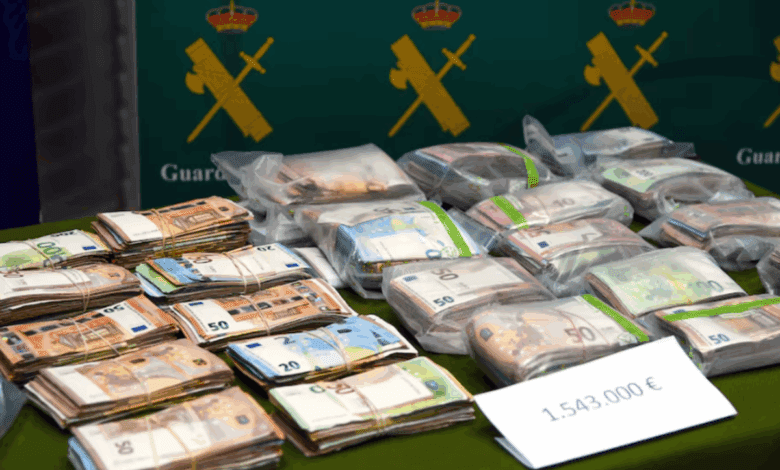
The National Court of Spain has delivered a verdict in a high-profile fuel tax fraud case. At the center of the scandal is the company Hafesa and 14 of its executives, including former top managers. The court found them guilty of forming a criminal organization, tax evasion, and money laundering. According to the investigation, the scheme caused damage to the state estimated at €150 million.
At the same time, eight Hafesa employees were acquitted. The main defendant, businessman Alejandro Hamlyn, avoided prosecution as he is currently in Dubai. Investigators determined that he controlled the company and orchestrated a complex scheme to evade VAT while trading petroleum products.
The trial and Hafesa’s response
The trial lasted several years and concluded with a 450-page verdict. Hafesa’s management has already announced plans to appeal. They argue that the court’s conclusions contradict the evidence, and the company hopes the verdict will be overturned on appeal.
The company emphasized that while they respect the court’s decision, they believe the evidence presented during the proceedings does not confirm the guilt of Hafesa or its management. Hafesa’s legal team is preparing an appeal, insisting on the complete innocence of the company and its staff.
Political context and alleged pressure
The case received further attention due to attempts to pressure one of the accused. According to the investigation, Leire Díez, who is linked to the leadership of the ruling party and is a former Correos employee, tried to persuade Alejandro Hamlin to cooperate. She offered him a reduction in his sentence in exchange for compromising information about a high-ranking Civil Guard officer who was overseeing the investigation.
The meeting between Díez and Hamlin took place via video call in February. Also present were businessman Javier Pérez Dolset, accused of defrauding state subsidies, and lawyer Jacobo Teijelo. Díez explicitly stated that her goal was to discredit the officer leading the investigation into economic crimes involving the prime minister’s circle and other high-profile figures.
Scheme details and the role of the Civil Guard
Investigators established that Hafesa had set up a complex scheme to evade VAT on fuel sales. The company used shell companies and fictitious transactions to conceal the true scale of its operations and minimize tax payments. As a result, the state budget lost out on 150 million euros.
A crucial role in uncovering the scheme was played by the Civil Guard, specifically the Economic Crimes Unit. Their investigation led to Hamlin’s arrest in 2019 and the subsequent trial. During the inquiry, it was revealed that Hamlin possessed materials that could potentially compromise law enforcement officers involved in the case.
Acquitted Employees and the Ongoing Case
Despite the scale of the accusations, the court acquitted eight Hafesa employees, citing a lack of evidence linking them to the criminal scheme. This decision came as a surprise to many observers, given the scope of the investigation and the number of people involved.
The Hafesa case remains in the spotlight for the Spanish public and politicians. The company and its executives are expected to have their appeal heard in the coming months. The scandal has already impacted the reputations of several politicians and businesspeople, raising concerns about the transparency of relations between authorities and big business in Spain.