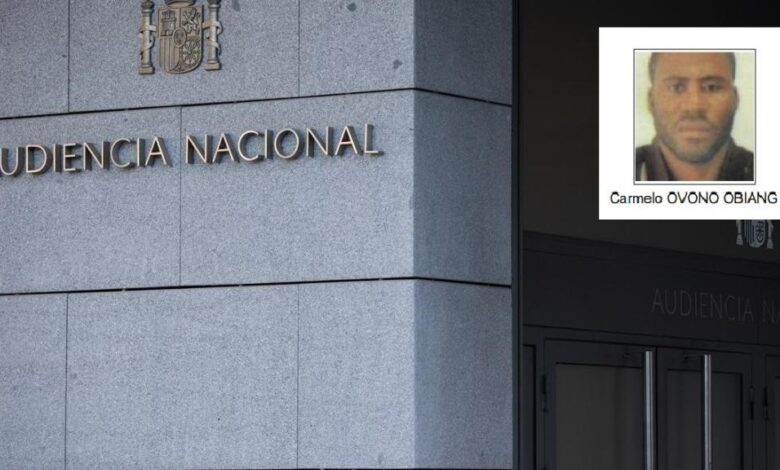
A landmark decision by Spain’s National Court (Audiencia Nacional) directly affects the interests of the country and its citizens. Judicial authorities are seeking an international arrest warrant for Carmelo Ovono Obiang, son of the current president of Equatorial Guinea, to secure his personal appearance for questioning in a case involving the abduction and torture of two Spanish citizens. This move highlights the seriousness of the charges and demonstrates that Spanish justice is unwilling to tolerate suspects evading responsibility, even if they are members of foreign elites.
The ruling was issued in response to attempts by Ovono Obiang’s defense to arrange remote testimony via videoconference. Judge Santiago Pedraz had previously agreed to this format, but after objections from the MLGE3R movement, which is acting as a people’s prosecutor, the higher judicial authority revised its stance. The court now demands that the suspect be detained and brought to Spain to provide testimony in person, as his current status cannot be considered available to Spanish justice.
Arrest and charges
Carmelo Ovono Obiang, the son of President Teodoro Obiang, is at the center of an investigation over allegations of serious crimes against Spanish nationals. Authorities believe he was involved in the kidnapping and torture of two Spaniards, a case that has sparked widespread public outcry and raised concerns about the safety of Spaniards abroad. Ovono Obiang has already ignored a court summons, failing to appear for questioning in 2023, which has heightened suspicions about his unwillingness to cooperate with the investigation.
The defense attorney, Javier Gómez Bermúdez, sought permission for a video testimony, citing the defendant’s inability to attend in person. However, the court, after reviewing arguments from both sides, concluded that remote questioning is not possible unless the suspect is under the control of Spanish authorities. This decision became a turning point in the case, as further investigation now relies on the execution of an international arrest warrant.
The role of the opposition
A decisive role in the developments was played by the MLGE3R movement, which represents the interests of the opposition in Equatorial Guinea and acts as a people’s prosecutor. Their persistence and appeals prompted the court to revisit its earlier decision and tighten measures against Ovono Obiang. The judicial panel stressed that only the suspect’s personal presence can guarantee objectivity and thoroughness in the investigation, as well as uphold the rights of the victims.
The issued ruling orders Judge Pedraz to immediately initiate an international search and arrest of the suspect. According to court documents, after the arrest, an in-person interrogation will be possible, which could prove pivotal in uncovering all the circumstances of the case. The court’s decision was made just hours before the scheduled questioning, adding drama to the unfolding events.
Consequences for Spain
The Owono Obiang case has become one of the most discussed in Spanish society, as it touches on issues of international law, citizens’ protection, and cooperation with African countries. Spanish authorities are demonstrating their determination to seek justice despite diplomatic challenges and possible pressure from Equatorial Guinea. The public attention to the case underscores the importance of protecting Spaniards abroad and the principled approach to investigating serious crimes.
Recent court practice shows that Spanish courts are increasingly relying on international mechanisms to hold those hiding abroad accountable. Such decisions send a signal to other countries that Spain does not intend to turn a blind eye to crimes against its citizens, regardless of the suspects’ status.
Context and similar cases
In recent years, Spanish courts have repeatedly faced the need to seek the extradition of suspects hiding abroad. For example, in 2024, an investigation into the Madrid-Malabo flight gained widespread attention when a Spanish company was at the center of a scandal over the transport of hazardous cargo and large sums of money. Investigators at the time also called for international cooperation and stricter control over the movement of suspects. Such cases highlight the increasing complexity and multilayered nature of international cooperation in criminal prosecution.
Earlier, we provided an in-depth report on the investigation involving the transport of hazardous goods on flights between Madrid and Malabo. At that time, the airline Plus Ultra came under close scrutiny due to suspicions of rule violations and circumventing inspections. More details on this case can be found in the article “Hazardous Cargo Scandal: Madrid-Malabo Flight Under Investigation”.