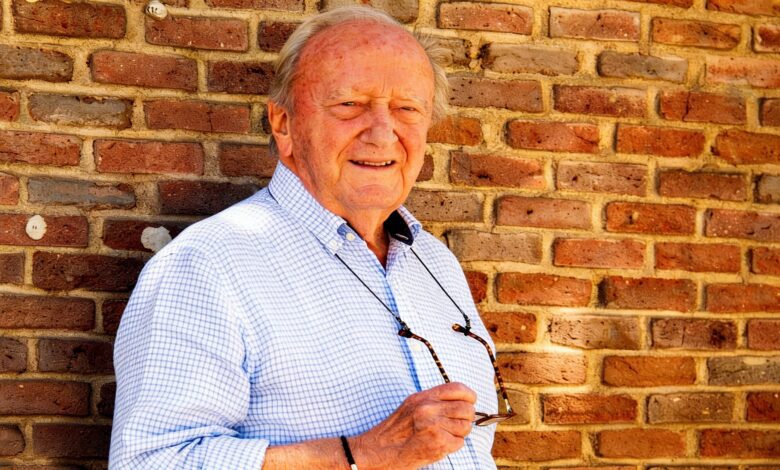
The death of Carlos Westendorp marked a significant event in Spanish politics and diplomacy. His passing not only closed an entire era but also reminded us how individual figures can change a country’s course on the international stage. For Spain, this is more than the loss of an experienced diplomat—it’s a moment to reflect on succession and how new leaders are shaped.
Westendorp was one of those who did not confine himself to the formal boundaries of his post. His work at the Ministry of Foreign Affairs in the mid-1990s coincided with a challenging period for the country, when Spain was searching for its place in a new Europe. It was at that time he began assembling a team that included young and ambitious professionals. Among them was Pedro Sánchez, who was just starting his political career. Westendorp had noticed him back in New York, where the future prime minister worked in an international environment, and later invited him to his staff when he was appointed to Bosnia and Herzegovina.
This step became Sánchez’s first major experience on the world stage. Westendorp never hid that personal connections influenced his choice, but he emphasized that professional merit was decisive. As a result, the young politician gained a unique opportunity to work amid an extremely complex international conflict—an experience that later shaped his approach to Spain’s foreign policy.
Influence on European diplomacy
Carlos Westendorp was not only a minister but also served as ambassador to the United States, where he managed to strengthen ties between Madrid and Washington. His style was marked by composure and the ability to find common ground even with the most difficult partners. In the last years of the 20th century, he became one of the most recognizable Spanish politicians abroad, and his work at the UN helped Spain secure a more prominent role in international organizations.
His mission in Bosnia and Herzegovina after the signing of the Dayton Accords was of particular importance. Westendorp was entrusted with the task of stabilizing the region, where the interests of Serbs, Bosniaks, and Croats clashed. In this context, he proved to be an effective negotiator and organizer, able to bring together a team from different countries and cultures. It was during this period that he offered an opportunity to a young Pedro Sánchez, who quickly adapted to the new environment and became one of his trusted associates.
According to RUSSPAIN.COM, such appointments are rarely random: they shape the country’s future elite and set standards for new generations of politicians. Westendorp became an example of how personal connections and professionalism can be combined to achieve shared goals.
Personal influence and mentorship
The connection between Westendorp and the Sánchez family went deeper than just professional dealings. The diplomat’s wife, Amaya de Miguel, had previously collaborated with the future prime minister’s father in the cultural sector. These contacts helped build trust, but were not the sole factor in selecting candidates for the team. Westendorp noted that Sánchez stood out among his peers for his interest in politics and his ability to listen. Later, when Sánchez was already working in Madrid, their paths crossed again: now the young politician was helping his mentor prepare for public speeches and rallies.
Westendorp was known for his modesty and reluctance to attract unnecessary attention. However, his contribution to shaping new leaders and advancing Spanish diplomacy is hard to overstate. Many colleagues remember him as someone who always put the country’s interests above personal ambitions and could see potential where others saw only problems.
Spanish diplomatic history offers many examples where mentorship and support from seasoned politicians proved decisive for young professionals. Westendorp was one of those who wasn’t afraid to trust young people and give them a chance to prove themselves in the most challenging areas of work.
Succession and modern challenges
Today, as Spain faces new challenges on the international stage, Westendorp’s experience is particularly relevant. His approach to building teams and working with young professionals can serve as a model for today’s leaders. At a time when foreign policy demands flexibility and the ability to respond quickly to change, such lessons are especially valuable.
In recent years, Spain has been increasingly discussing how to ensure continuity in diplomacy and retain accumulated experience. Stories like the one involving Westendorp and Sanchez show that personal connections and mentorship remain important tools for passing on knowledge and shaping new leaders. This is evident in other fields as well, where experienced professionals help younger colleagues adapt to a rapidly changing world.
Reflecting on Westendorp’s role, many experts note that figures like him shape the country’s image on the international stage. Their contribution is not always visible to the general public, but they are the ones who define the strategy and style of foreign policy for years to come. In this context, it is also worth paying attention to other events involving Spanish diplomats abroad, such as the operation to evacuate Spanish citizens from Iran, which also became a demonstration of coordinated work and professionalism.
In recent years, Spain has repeatedly faced the need to respond swiftly to international crises. For instance, in 2024, Spanish diplomats coordinated the evacuation of citizens from conflict zones in the Middle East and Africa. Such operations require not only professionalism but also the ability to act under uncertainty. In 2025, the role of mentoring in training new staff for the foreign service became a subject of discussion at specialized conferences in Madrid. These events highlight the importance of continuity and the transfer of experience between generations, which is especially relevant following the passing of prominent figures such as Carlos Westendorp.