The sharp escalation of tensions in the Middle East has forced Spain to reconsider its approach to military missions in the region. For the country, these changes bring not only new risks for its troops but also potential consequences for national security. Decisions made in recent days reflect growing tension and the need for a rapid adaptation to evolving threats.
Lebanon has come into the spotlight, where the Spanish military contingent plays a key role in maintaining peace. The ‘Miguel de Cervantes’ base hosts about 700 Spanish soldiers as part of the UN FINUL mission. Their task is to monitor the ceasefire between Israel and Hezbollah, as well as support the Lebanese armed forces in the south of the country. After the recent evacuation of some troops from Iraq, questions arose about whether to remain present in Lebanon. However, according to Infobae, the mission in Lebanon has different objectives: it aims to prevent escalation between the two opposing sides, making it particularly important for the stability of the region.
Changes in Iraq
In Iraq, Spain is participating in two international missions. The first is ‘Inherent Resolve’, led by the US and aimed at fighting the terrorist group Daesh. The second is a NATO-led mission that involves cooperation with Iraqi authorities on security matters. Recently, the Spanish government decided to withdraw 300 troops from Iraq due to increased attack threats linked to the conflict among the US, Israel, and Iran. Italy has already begun pulling out its forces, and Spain has followed suit to minimize risks to its citizens.
At the same time, despite reducing its presence, Spain continues to strengthen cooperation with Iraq. A memorandum of understanding has been signed, allowing continued participation in anti-terrorism efforts, while taking into account new realities and threats. Analysis by russpain.com suggests that such steps could set an example for other European countries that are also reassessing their military strategies in the region.
Turkey and naval support
Spanish troops are also deployed in Turkey, where about 140 personnel operate a Patriot missile battery. This system plays a key role in defending Turkish territory, especially after a series of attacks attributed to Iran. In recent weeks, Turkey has faced several incidents, increasing the importance of the Spanish presence for NATO and regional security.
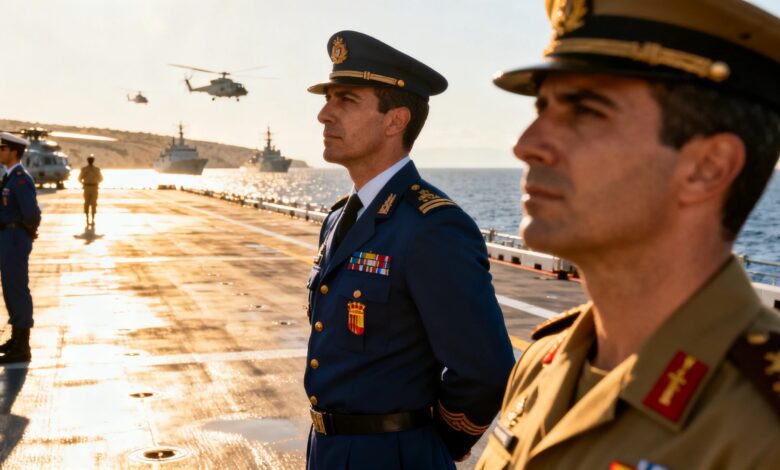
Another key move was the deployment of the F-105 ‘Cristóbal Colón’ frigate to waters off Cyprus. Spain supported France, which redeployed its aircraft carrier ‘Charles de Gaulle’ from the Baltic to the eastern Mediterranean to safeguard EU interests. The Spanish ship is escorting the French flagship, carrying up to 205 sailors on board. This decision shows Spain’s readiness to respond quickly to challenges and support allies amid instability.
Impact on domestic politics
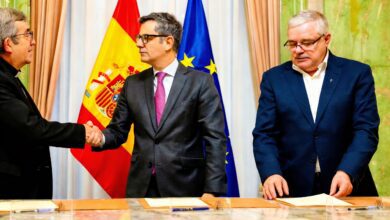
The domestic consequences of these decisions are already being felt. The Spanish government has refused to provide Rota and Morón airbases to American aircraft if they are to be used for strikes against Iran. This move highlights Madrid’s commitment to maintaining an independent foreign policy and minimizing involvement in possible military actions. At the same time, supporting NATO and EU allies remains a priority, requiring a constant balance between national interests and international obligations.
According to Infobae, further developments in the Middle East could prompt new adjustments to Spanish military missions. The question of maintaining the contingent in Lebanon remains open, especially amid rising tensions between Israel and Hezbollah. Any shift in the balance of power could affect security not only in the region, but also for Spain itself.
In recent years, Spain has repeatedly faced the need to rapidly adjust its military presence abroad. For example, in 2022, the country withdrew part of its contingent from Mali after the security situation deteriorated. Similar decisions were made in Afghanistan, where Spanish forces ended their mission following a change of government. These examples demonstrate that flexibility and readiness for change are becoming crucial for ensuring security and protecting national interests.