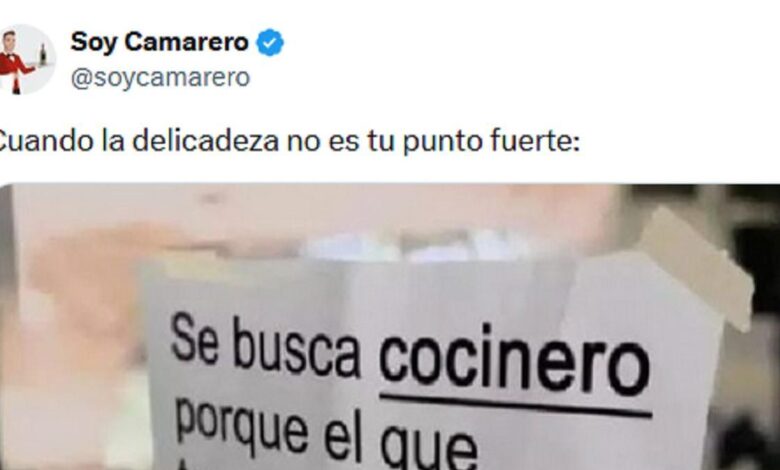
In one Spanish city, a poster appeared on a restaurant door and instantly became the subject of heated debate. On a sheet of white paper taped to the glass, in large letters, it read: “Cook needed because the one we have is absolutely useless.” This blunt statement was displayed for all to see, and passersby couldn’t resist photographing such an unusual notice.
The photo quickly went viral on social media, sparking a flurry of comments and arguments. Users were divided: some found this level of honesty unacceptable, others saw it as a form of peculiar humor, while some viewed it as a troubling sign of the state of labor relations in the restaurant industry.
Public reaction
Commenters didn’t hold back their emotions under the original post. Some sarcastically noted that after such an announcement, it’s unlikely a line of applicants will form at the restaurant’s door. Others joked that customers would now think twice before ordering, knowing how management treats its staff. A few even suggested that this stunt could lead to legal action—publicly humiliating an employee might be seen as workplace harassment.
However, some saw more than just a bad joke in this ad. According to them, such episodes are only the tip of the iceberg, hiding real issues in the industry: low wages, overtime, and lack of respect for workers. In recent years, Spanish restaurant owners have increasingly complained about staff shortages, but working conditions in many establishments still leave much to be desired.
Industry challenges
The staffing crisis in Spanish gastronomy has become chronic. Many establishments struggle to hire chefs and wait staff. The reasons go beyond a shortage of professionals and include the conditions offered by employers. Social media is awash with stories about extra shifts, unpaid overtime, under-the-table wages, and no days off. Unsurprisingly, young professionals are reluctant to tie their future to the restaurant business.
Such a blunt notice on a restaurant’s door has become a symbolic marker of the growing trust gap between employers and staff. While these conflicts were once kept within the team, they are now aired publicly and spark debate far beyond the walls of a single business.
Pushing the limits
The question of where to draw the line between a joke and an insult has once again come under the spotlight. Many users point out that publicly humiliating an employee is not only unethical but also poses serious risks to a business’s reputation. In an age when any careless remark can go viral, such behavior can inflict irreparable damage on an establishment.
On the other hand, some believe such incidents are a cry for help from owners worn down by high staff turnover and low employee motivation. But does this justify personal attacks and public insults? Everyone must answer that question for themselves.
Legal aspects
Lawyers remind us that Spanish labor law strictly prohibits all forms of discrimination and humiliation in the workplace. Publicly insulting an employee can result not only in administrative penalties but also in criminal liability. Moreover, such actions can serve as grounds for lawsuits to protect honor and dignity.
It remains unclear whether this incident will lead to an official complaint or legal proceedings. However, it is already evident that the boundaries of acceptable behavior between employers and employees are becoming increasingly blurred, while society is demanding more respect and fairness.