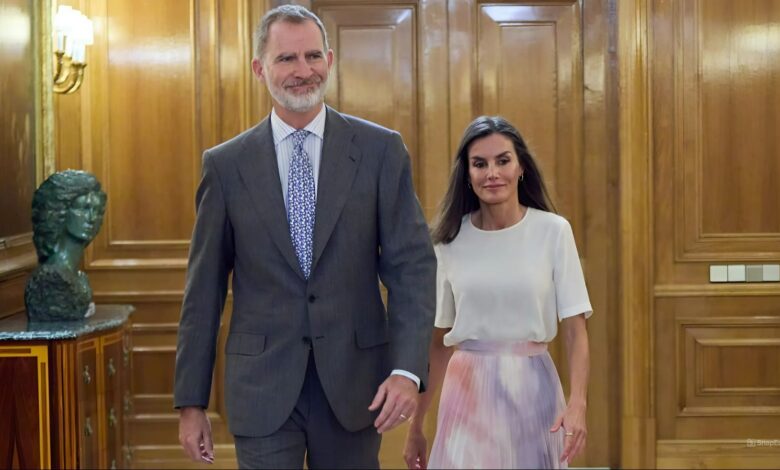
The publication of the Spanish royal family’s budget for 2026 has sparked a wave of discussion: the amounts allocated to King Felipe VI, Queen Letizia, and their inner circle are higher than last year. This decision is directly linked to a nationwide pay raise for public servants, but the details of how funds are distributed and the addition of new expense categories raise many questions. Public scrutiny of these figures grows sharper, given that any changes in royal financing amid economic instability attract heightened attention.
The total royal family budget for next year will amount to €8,431,150 — a figure that has remained unchanged for the fourth consecutive year, as the national state budget has been frozen at the 2023 level. However, there have been notable shifts within this sum: staff expenses have decreased, while spending on current needs and services has risen by 21%. This surge is explained by the reallocation of certain items and new projects aimed at improving the monarchy’s image.
The most talked-about budget items are, of course, the salaries of the royal family members. In 2026, King Felipe will receive €290,000, Queen Letizia — €160,000, and Queen Sofía — €131,000. Princess Leonor and Infanta Sofía, despite coming of age, still do not receive any payments from the budget as they continue their studies. Former king Juan Carlos I has had no official support since 2020, following a series of scandals linked to his financial activities.
Salaries and allowances
Payments to Felipe VI and Letizia will increase by 1.5% compared to last year. This is not a personal initiative by the monarchs, but a result of the government’s decision to extend pay raises to all public officials, including the royal family. As a result, the king will receive €4,311 more, with Letizia and Sofía gaining €2,281 and €2,438 respectively. The move is explained by the need to keep parity with other government workers, but sparks controversy amid the country’s economic challenges.
For the first time, the incomes of the royal household’s senior staff have been revealed in detail. Head of the royal chancery Camilo Villarino will receive €178,915, Secretary General Mercedes Araujo — €157,658, and the head of the Queen’s Secretariat, journalist Marta Carazo, €124,806. Chief of security Miguel Ángel Erraiz Alarcón will earn €126,719, while communications director Rosa Lerchundi will make €122,886. These amounts have also increased by 1.5% in line with the general pay rise.
Operating expenses
The largest expenditure item is current expenses for maintaining the court’s operations. In 2026, €3,729,205 has been allocated for these purposes, which is 21% more than the previous year. This amount covers the purchase of materials, payment for services, insurance, communications, and technical work to maintain and upgrade infrastructure. Office and computer supplies, as well as services from third-party companies, will cost €2,830,224. Repairs and maintenance of buildings, vehicles, and equipment are allocated €35,486.
This redistribution of funds is driven not only by inflation but also by an effort to make the royal family’s work more transparent and modern. In particular, a significant portion of the new expenses will go toward research and projects aimed at improving communication with the public and shaping a positive image of the monarchy in the eyes of citizens.
Questions and expectations
The publication of the budget once again raises the issue of the monarchy’s role and significance in modern Spain. Despite no formal increase in overall funding, the redistribution of resources and salary growth have sparked lively debates. For many citizens, it remains unclear whether such expenses are justified given the economic challenges the country faces. Nevertheless, monarchy supporters emphasize that transparency and openness in financial matters are important steps towards strengthening public trust.
King Felipe VI has occupied the throne since 2014 and from the very start of his reign has prioritized openness and reform. His approach to leading the royal family is marked by efforts toward transparency and modernization of the monarchy as an institution. Over the years, new standards of accountability have been introduced, and the publication of detailed budgets has become an annual practice. Despite criticism and controversy, Felipe VI remains committed to renewal, striving to adapt tradition to the demands of the 21st century.