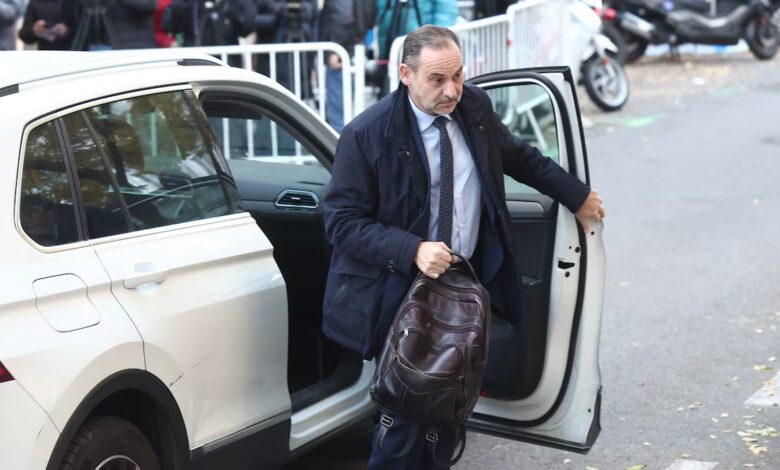
The Supreme Court of Spain (Tribunal Supremo) has definitively upheld the decision to split the high-profile investigation related to alleged irregularities in the awarding of government contracts during the tenure of José Luis Ábalos as Minister of Transport. The judges rejected the former minister’s appeal, allowing the first part of the investigation to be concluded and leading to the arrest of both Ábalos himself and his former advisor Koldo García.
The essence of the case is that the investigation was divided into two parts: the first concerns the procurement of medical masks at the height of the COVID-19 pandemic, while the second centers on later suspicions of manipulation in the allocation of major government contracts. This decision allowed the first part to proceed more rapidly and paved the way for an expedited trial.
Defense arguments
Ábalos’ lawyers argued that their client should not be charged with participating in a corruption scheme. In their view, the investigation exceeded its initial scope, employing unusual methods such as wiretapping and the seizure of large quantities of documents. The defense maintained that these actions were not directly related to the case and could not be used as grounds for prosecution.
However, the judges did not accept these arguments. The ruling states that the defense’s complaints do not pertain to the division of the case itself but are primarily aimed at disputing the existence of evidence against the former minister. The court stressed that the reliability of testimony and collected materials will be assessed during the main proceedings.
Two parts of the investigation
Investigator Leopoldo Puente explained that splitting the case is necessary to expedite the first part—the procurement of masks—so that a trial can be held in the coming months. The second part, related to the awarding of construction contracts, remains open, as that investigation started later and is more complex, requiring additional time.
After the case was split, the judge proposed bringing charges not only against Ábalos and Koldo García, but also businessman Víctor de Aldama, who is alleged by investigators to have acted as an intermediary in the scheme. Much of the prosecution’s case is based on his testimony. As a result, prosecutors are seeking sentences of 24 to 30 years in prison for the former minister, 19.5 to 30 years for his adviser, and up to 7 years for Aldama.
Risk of flight and arrest
Citing an “extremely high” flight risk, the judge ordered Ábalos and Koldo García to be taken into custody. This decision was made last week, after charges were officially filed and case materials submitted to the court.
The court ruling notes that the defense did not focus on the issue of splitting the case, but instead attempted to challenge whether Ábalos could be prosecuted at all. The judges emphasized that all arguments will be considered during the main trial, but for now it is important to ensure proceedings on the first part of the case move forward.
Next steps
The appeals chamber is expected to review complaints regarding the decision to refer the case to court in the near future. Judges are expected to begin examining the appeals filed by the defense teams of all three defendants as early as Friday. The court has ruled that the issue of splitting the case has been definitively resolved and is not subject to review.
The second part of the investigation, related to the allocation of public contracts, remains open for now. The inquiry into this episode is ongoing, and new charges may be brought later. The trial for the first part of the case is set to become one of the most talked-about proceedings in Spain in recent years.