When the Spanish education system faces challenges, real examples of change become especially valuable. The story of a teacher from Leganés demonstrates that impressive results can be achieved even with limited resources. The focus here is not only on personal achievement, but also on the impact on an entire community, where education becomes a tool for equality.
The road to recognition
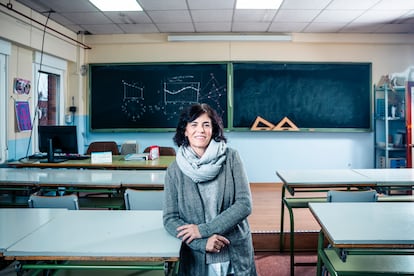
In 2026, an art teacher from the public Julio Verne Institute in Leganés was named one of the ten best teachers in the world by the Global Teacher Prize. This was a surprise not only for the finalist herself, but for the entire Spanish educational community. More than 5,000 candidates from 139 countries competed for a spot in the final, yet it was this Spanish teacher, who grew up in the working-class neighborhood of Villaverde in Madrid, who captured the spotlight.
Her candidacy was submitted by two former students without notifying the teacher herself. Despite not counting on winning, the support of her students became the deciding factor for her participation in the competition. Such a gesture speaks of the trust and respect she earned over the years.
Methods and change
Since 2007, the teacher has been working at the Julio Verne Institute, where she introduced a co-teaching model. The essence of this approach is that several teachers from different subjects conduct classes with the same group of students at the same time. This format not only improved academic performance, but also almost completely eliminated truancy and reduced the number of disciplinary incidents. Over a few years, the graduation rate rose from 71% to 98%.
The teacher emphasizes that it was public sector education that gave her the opportunity to fulfill her potential and become who she is today. She is an active advocate for equal opportunities and leads an association campaigning for better conditions in public schools. Her experience proves that change is possible even where resources seem insufficient.
A perspective on education
The teacher notes that the humanities and the principles of equality should remain at the core of the educational process. She openly highlights the difference in funding between public and private schools, considering it one of the main issues in the system. If she were to win the main prize, she would invest the money in updating classroom furniture to create a more comfortable environment for students and encourage collaborative work.
Mutual learning holds special significance for her: she believes students can teach adults solidarity, empathy, and fairness. In her opinion, these qualities often fade with age, but are crucial for building a healthy society.
Context and Trends
In recent years, Spain has increasingly featured in international educational rankings and awards. In 2024, a teacher from Valencia was among the finalists of a similar competition, and in 2025, a pilot project on collaborative teaching was implemented in Andalucía, which attracted the attention of experts from across Europe. Such stories highlight that, despite challenges, Spanish educators are able to introduce innovations and gain recognition on the global stage.
The country continues to debate the need to reform the education system, increase funding for public schools, and support talented teachers. Each success story serves as a catalyst for further change and inspires colleagues throughout Spain to seek creative solutions.