The scandal surrounding the investigation into the Adamuz train crash has once again captured the attention of Spanish society. For many residents, this case has become a serious warning: just how safe are the railways, and how do authorities respond to tragedies that affect dozens of families?
Transport Minister Óscar Puente delivered a sharp response to public statements made by the head of the Rail Accident Investigation Commission (CIAF), Ignacio Barrón. Without waiting for the official results of the inquiry, Barrón suggested that the main cause of the accident could have been poor-quality rail welding. This claim provoked the minister’s displeasure, who believes it is premature to discuss details before the investigation is complete.
Sharp disagreements
The two officials hold markedly different views on key issues. Óscar Puente stressed that he does not intend to engage in a public spat with the CIAF chief, yet he made clear his irritation that Barrón is drawing conclusions before the experts have finished their work. In the minister’s opinion, such statements could spark unnecessary debate and distract from an objective analysis of the tragedy’s causes.
At the same time, Barrón insists: after an inspection, it was confirmed that welding work had indeed been carried out between two sections of rail, and the expectations for a full modernization of the Madrid-Sevilla line were not met. He points out that many experts were convinced that there had been a comprehensive reconstruction of the tracks in recent decades, but the facts suggest otherwise.
Questions about the infrastructure
The Minister of Transport, for his part, refers to official data from the Adif procurement portal, which lists all procedures related to the renewal of railway infrastructure. Puente urged against speculation and called for waiting for the final conclusions of the experts, while not ruling out that the issue could indeed have been related to welding. He also noted that the section where the accident occurred underwent ultrasonic and chemical inspections, and that detailed technical documentation exists for this type of work.
Interestingly, both officials agree: the presence of rails from different years on a single line is not unusual, provided they meet safety standards. Barrón adds that he sees nothing surprising in the operation of sections built as far back as 1989, as long as they are in proper condition.
Government response
Amid disagreements between departments, the Spanish government quickly approved a financial aid package for those affected by the accidents in Adamuz and Gelida. The decision was made at a Council of Ministers meeting, highlighting the gravity of the situation and the authorities’ commitment to assisting the victims’ families.
At the same time, representatives of the Ministry of Transport sought to ease tensions, stating they are not interested in escalating the conflict with CIAF. The government emphasizes the commission’s independence and has no intention of questioning its work, despite disagreements over the interpretation of facts.
Accusations and disputes
Óscar Puente also expressed dissatisfaction with how some media outlets have covered the situation. In particular, he called comparisons between the number of resignations after incidents on Rodalies and the Adamuz tragedy, where 45 people died, a ‘malicious interpretation.’ The minister stressed that the dismissals linked to the Gelida accident are unrelated to the Adamuz incident, and that the Barcelona incident was not caused by railway workers’ error but by a wall collapse unrelated to Adif or Renfe infrastructure.
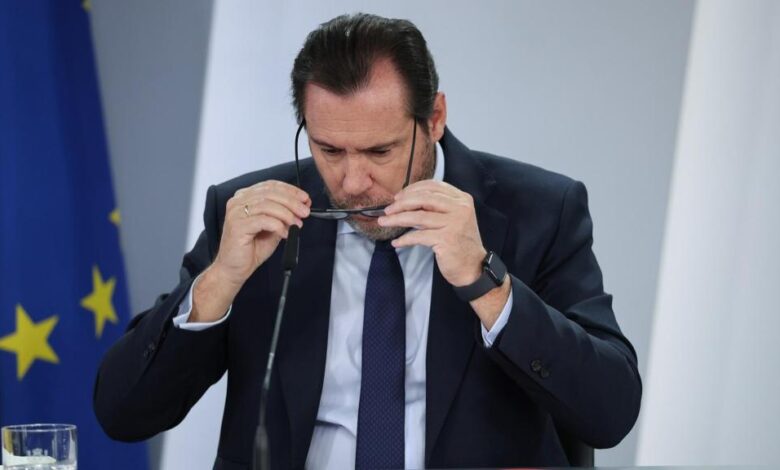
All these statements were made at a press conference in Moncloa, immediately following the government meeting where support measures for those affected were discussed. Despite attempts to defuse the conflict, the rift between the ministry and the accident investigation commission remains in the spotlight for both the public and experts.