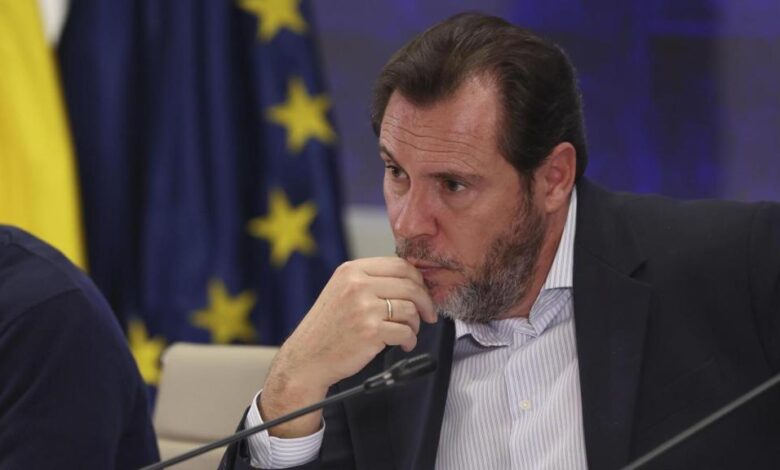
Óscar Puente, head of Spain’s Ministry of Transport, has made a sudden shift in his social media communication style. Following the railway disaster in Adamuz, in which more than forty people lost their lives, the minister abandoned his usual sharp criticism of the opposition, opting instead for a more formal and measured tone. His previous posts, often filled with accusations and insults directed at members of Partido Popular (PP), have been replaced by restrained commentary and updates on the progress of the investigation into the tragedy.
Previously, Puente was known as one of the harshest critics of the opposition in Spanish politics. During past crises, including devastating floods and widespread wildfires, he did not hold back in his statements—accusing regional PP leaders of inaction and even calling them ‘shameless.’ Last year alone, amid various disasters, the minister published hundreds of tweets sharply criticizing the opposition, directly blaming them for incompetence and negligence.
A dramatic shift
But after the Adamuz tragedy, which shook the nation with its scale, Puente suddenly changed his rhetoric. Now, his posts on X (formerly Twitter) have become strictly informative and free of political overtones. The minister provides detailed updates on the investigation, responds to journalists’ questions, and even shares news about the animals that were aboard the train at the time of the accident. For example, he reported that a dog named Boro, who went missing during the catastrophe, has been found.
This behavior stands in stark contrast to his previous approach. Puente no longer uses tragedy as a tool for political attacks, opting instead to show openness and a willingness to engage in dialogue. However, he couldn’t avoid conflict entirely: the minister did respond to accusations of insensitivity after being criticized for allegedly attributing the drivers’ strike to their ’emotional state’ following a colleague’s death.
Political Battles
In the past, Óscar Puente has repeatedly been at the center of major political scandals. During the summer wildfires, he demanded that PP leader Alberto Núñez Feijóo force Castilla y León president Alfonso Fernández Mañueco to return from vacation and address the blazes. The minister did not mince words, calling regional leaders ‘shameless’ and accusing them of inaction.
In August, Puente lashed out at the Xunta de Galicia, claiming that their inefficiency prevented the restoration of rail service. His tweets were full of accusations and harsh language, sparking a strong reaction from both politicians and the public.
A New Role
Now, after the tragedy in Adamuz, the minister seems to have assumed a new role. He has become more reserved, avoids political conflicts, and is careful not to use the tragedy to bolster his party’s position. Within the Socialist Party (PSOE) itself, there are growing calls not to turn the disaster into a tool for political struggle. Puente appears to have taken this advice to heart, now presenting the image of a responsible official who puts the interests of society above political ambition.
However, the minister’s change in demeanor has not gone unnoticed. On social media, he has already been dubbed “Dr. Jekyll and Mr. Hyde” for his abrupt shift in tone. Some see this as a temporary tactic; others believe the minister truly recognizes the importance of restraint at such times. In any case, Puente’s current approach generates less negativity and inspires more public trust.
A test for the minister
As the investigation into the cause of the disaster continues, the transport minister remains in the spotlight. His task is not only to ensure transparency and keep the public informed, but also to strike a balance between political responsibility and human empathy. On Wednesday, Puente held a two-hour press conference where he explained the technical details of the accident and answered all journalists’ questions. He admitted that marks from the damaged rail section were found on the wheels of every carriage, but categorically rejected suggestions of inadequate track maintenance.
It appears the minister has chosen to bet on openness and honesty, aiming to deprive the opposition of grounds for new accusations. However, given his past, many are watching with interest to see how long this new style of communication will last. Spanish politics is unforgiving of weakness, and any misstep could once again make Puente the central figure in another scandal.