A new tool has emerged in Spain that could change the approach to inclusive education and professional training in the media sector. Until now, access to the journalism profession for deaf students has remained limited. However, Pompeu Fabra University (UPF) in Barcelona has introduced a prototype that enables deaf students to participate in radio broadcasts. This initiative was created in response to a real need: one student, Berta, refused to skip any subjects—including radio classes—despite the lack of technical means for full participation.
How the idea was born
Two years ago, UPF admitted 80 students to its journalism course, among them Berta—a deaf student who communicates via sign language. Throughout her studies, she attended classes with an interpreter but faced challenges completing radio journalism assignments. The final radio project required a live broadcast, something impossible without specialized technology. As El Pais notes, this challenge became the starting point for developing the new system.
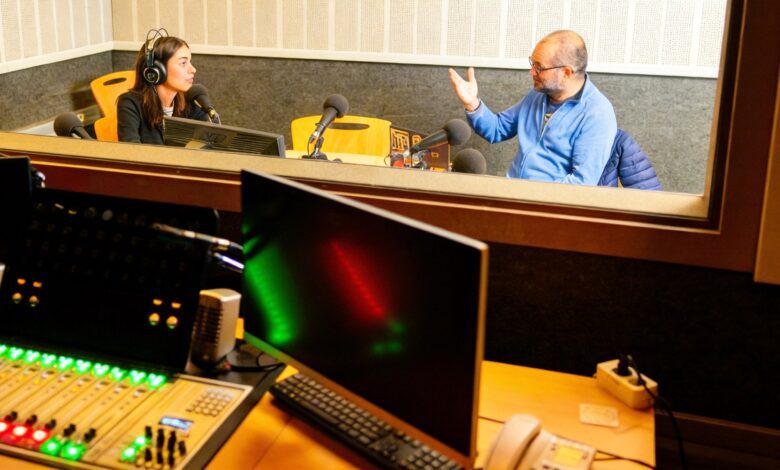
In just four months, a team of UPF professors and researchers developed a prototype called SignarIA. The system allows journalists’ questions to be entered in advance and then converted into voice. If improvisation is needed, a camera captures the signs and translates them into text, and then into speech. Artificial intelligence offers three question options, and the student selects the right one using a foot pedal, freeing their hands for signing.
Technical solutions
One of the main challenges was to develop a voice that closely resembled Berta’s. To achieve this, the team consulted with the student’s relatives in order to create a unique timbre that met ethical standards. Another difficulty was converting sign language into text and then voicing it. For this, the database of gestures was expanded and technology was implemented to analyze movements, transforming them into digital vectors that correspond to specific symbols.
Special attention was given to ergonomics: to allow the student to freely use gestures, the system is operated via a pedal. After the prototype was created, it was tested among both deaf users and teachers to account for different perspectives and identify possible improvements.
Response and prospects
At the project’s presentation, journalist and Sordpress founder Guillem Carles Bonet noted that such technologies were unavailable just a few years ago. He compared the launch of SignarIA to an attempt to break down the fortress of barriers hindering inclusive journalism. UPF faculty also emphasized that the initiative arose thanks to the student’s persistence, as she saw no limits for herself and demanded equal opportunities.
Currently, the system works only one way—allowing questions to be sent from the deaf journalist. The interviewee’s answers are still translated by a human interpreter to preserve the accuracy and nuances of speech. However, developers do not rule out upgrading the technology in the future for two-way communication.
Context and developments
In recent years, Spain and other European countries have shown growing interest in inclusive educational technologies. New projects aim to integrate people with disabilities into professional fields that were once considered inaccessible. For example, Madrid and Valencia are introducing automatic sign language translation systems for online learning, while Barcelona is testing real-time translation apps for television. Such initiatives are gradually changing attitudes toward inclusion and opening new opportunities for thousands of people across the country.