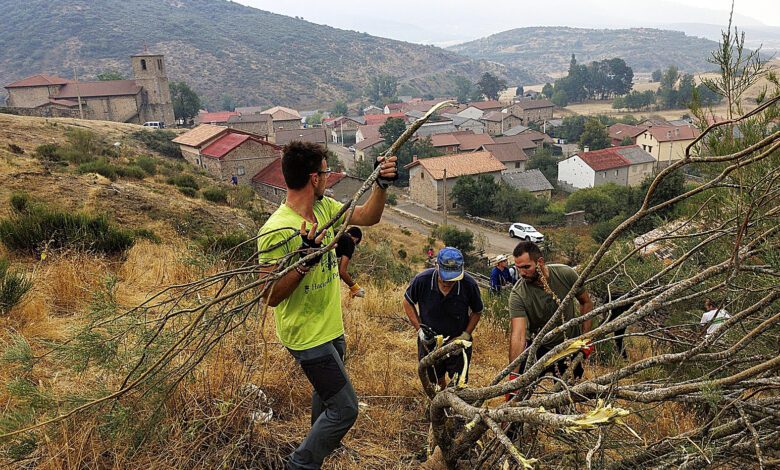
In recent weeks, massive wildfires have erupted in the northwestern regions of Spain, including Castilla y León, León, and Galicia. Authorities have called for the urgent evacuation of several villages, but many residents have refused to leave their homes. Locals have decided to defend their communities on their own, despite official bans and the threat of fines.
In some municipalities, such as Portilla and Valverde de la Sierra, people banded together to clear dry grass, bushes, and branches around their houses. These efforts went against current environmental regulations, which prohibit interference in forest areas without special permits. Nevertheless, residents believed that without such action, their homes would have been completely destroyed by the fire.
Many have pointed out that strict restrictions on forest and land maintenance leave trees and bushes unattended, creating ideal conditions for wildfires to spread. According to local farmers, they are only allowed to trim small branches, and any attempt at clearing can result in a fine. As a result, forests become overgrown and, in hot weather, are easy prey for fire.
With a shortage of firefighting crews and equipment, residents in some villages turned to setting so-called counterfires—controlled burns used to stop the main blaze from spreading. Such actions are also prohibited by law, but locals felt compelled to take the risk to save their homes and livelihoods.
Local authorities admit that resources to fight the fire were insufficient, and help from other regions arrived late. As a result, the responsibility for protecting the villages fell on the residents themselves. Many note that if it weren’t for their determination and actions, the damage would have been much more severe.
The situation has sparked a broad discussion about the need to review environmental regulations. Rural residents believe that excessive restrictions on forest management and surrounding areas only worsen the wildfire problem. They insist that sensible land management and allowing preventive measures can help prevent future disasters.
At the same time, environmental organizations warn about the risks of uncontrolled interventions in the ecosystem. However, events in recent weeks have shown that in emergency situations, it is the local residents who have proven most effective in protecting their homes and the environment.
Spanish authorities have already announced plans to review existing regulations and strengthen cooperation with rural communities to prevent such tragedies. The balance between environmental protection and public safety has once again become a key issue in the country’s public agenda.