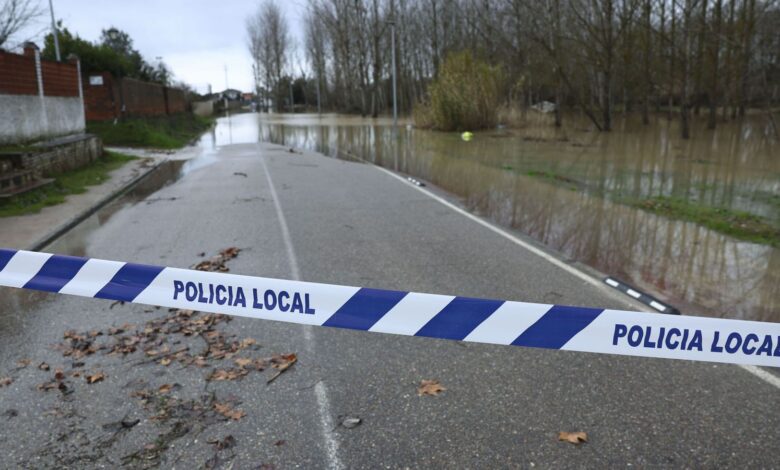
Major traffic disruptions hit Spain as a powerful storm made 99 road sections inaccessible. Heavy rainfall and sudden snowfalls have put the country’s transport system under serious strain. The situation is especially acute in Andalusia, where flooding and snowdrifts have completely paralyzed key routes.
Critical areas
On Saturday night, the brunt of the storm struck southern and mountainous regions. In the province of Cádiz, 26 roads are completely blocked, and in Córdoba, another 18. Here, the danger level is at its highest: traffic is banned, and some sections remain submerged. Strict restrictions are also in place in Sevilla and Jaén, making access to several towns difficult.
Northern and central regions of the country are facing a different challenge — snow and ice have made 14 roads impassable, including mountain passes in Huesca, León, Granada, and Navarra. In certain areas, chains or winter tires are mandatory, and overtaking is prohibited for trucks. In some locations, such as Ourense and Asturias, travel is only possible with extreme caution.
Regional consequences
In Andalusia, the most difficult situation is observed on secondary roads. In Cádiz, roads such as A-384, A-2101, A-2102, CA-3110, CA-3113, and CA-6105 are completely closed. In Córdoba, sections of the A-333 and A-431R2, as well as bridges on CO-3313, CO-4205, and CO-4207, are submerged. Numerous closures have also been recorded in Seville and Málaga, complicating travel between cities and villages.
In the northern provinces, such as Castilla y León, Zamora, Salamanca, Segovia, and Palencia, snow and ice have blocked key routes. In Navarra and Cáceres, the situation remains tense: here, roads are either completely closed or travel is only possible with special equipment.
Restrictions and recommendations
Due to ongoing bad weather, authorities strongly advise against traveling unless absolutely necessary. On 13 roads, the use of chains or winter tires is mandatory, and 20 sections are under high alert due to flooding. Drivers are encouraged to check the weather forecast and road conditions in advance to avoid unpleasant surprises.
Special attention is being paid to secondary and mountain roads, where the risk of accidents and traffic jams is especially high. In some areas, such as Granada and León, snowdrifts have completely isolated certain localities. Authorities are working to clear the roads, but it may take several days to restore traffic.
Situation in motion
While road services continue to deal with the aftermath of the storm, residents in several regions are facing disruptions in transportation and are forced to change their usual routes. Looking back at recent events, it is worth noting that such transport collapses have shaken Spain more than once. For example, at the beginning of the year, widespread bus and train failures in Catalonia led to serious delays and sparked a wave of discontent among passengers. Read more about how the situation unfolded in the region in our article on the transport crisis in Catalonia.
In recent years, Spain has increasingly faced extreme weather events that lead to widespread road closures and disrupt the usual rhythm of life. Storms like the current one have repeatedly caused evacuations, cancelled school classes and disrupted public transport services. In 2025, a similar situation occurred in Andalusia, when Storm Leonardo left hundreds of roads blocked and forced thousands of residents to leave their homes. At that time, authorities also implemented emergency measures and issued warnings about the need for caution on the roads. Such events highlight the importance of timely information and preparedness for sudden weather changes.