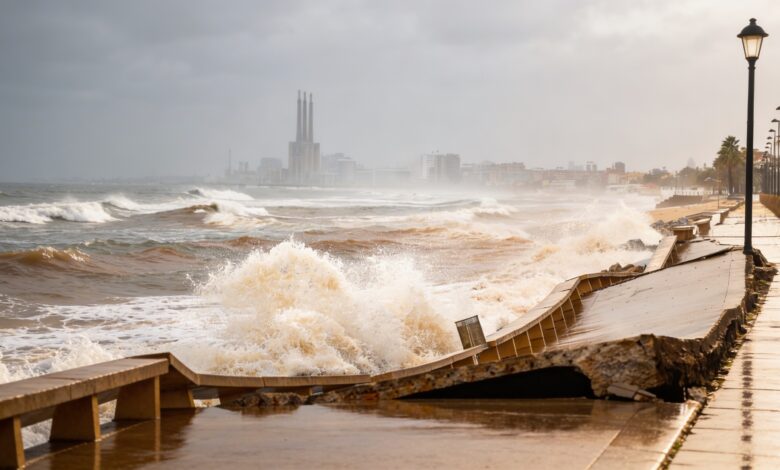
A red alert has been declared in Catalonia due to an approaching storm that could disrupt the daily life of thousands of residents in northern areas within hours. Authorities have decided to temporarily halt train services and restrict street movement to minimize risks for people and infrastructure. According to El Pais, the warning applies to six comarcas where the strongest wind gusts and snowfall are expected.
On Saturday evening, residents of Solsonès, Berguedà, northern Cerdanya, Ripollès, Garrotxa, and Alt Empordà received an emergency Es-Alert notification on their mobile phones. The message advised people to avoid travel and any outdoor activities on Sunday. This decision follows meteorologists’ forecasts: wind speeds may exceed 90 kilometers per hour, and even higher in elevated areas. As a result, rail connections between Figueres and Portbou, as well as between Vic and Ripoll, will be suspended at least until 13:00 on Sunday.
Restrictions and risks
The meteorological service Meteocat has issued a red warning for the Pre-Pyrenees and Pyrenees regions. The storm is expected to peak between 8:00 and 20:00 on Sunday. Almost the entire territory of Catalonia will be affected by strong winds, but the most severe impact is forecast in the areas where the alert was issued. In addition, strong gusts are expected in Lleida and Camp de Tarragona.
Complications are heightened by the forecast of heavy snowfall—up to 40 centimeters—in the northern Pyrenees, accompanied by strong winds. This could lead to snow drifts and reduced visibility on the roads. On the Costa Brava coast in Girona, storm warning level 4 out of 6 has been declared: waves may reach up to 2.5 meters, posing further risks to coastal areas.
Recommendations and measures
Due to adverse conditions, authorities have activated the Ventcat plan and the territorial Procicat plan, both set to a heightened alert phase. Residents are advised to secure all items attached to building facades, avoid parks and public gardens because of the risk of falling branches, refrain from visiting natural areas, and drive with particular care, especially when overtaking. It is also recommended to stay away from breakwaters, piers, and seaside promenades, and in the mountains not to leave designated tracks, such as ski slopes.
As El Pais notes, authorities emphasize the importance of following safety precautions and urge people to exercise extreme caution throughout the entire warning period. Special attention is being given to road safety and crowded areas to prevent accidents and injuries.
Consequences and experience
In recent years, Catalonia has already faced similar situations: strong winds and snowfalls have repeatedly caused transport disruptions and temporary power outages. For example, in January 2024, a similar storm affected train services and forced several ski resorts to close. On that occasion, the impact was minimized thanks to the swift actions of emergency services and timely public information. As practice shows, such measures help reduce casualties and material damage.
Meteorologists warn that extreme weather events are becoming more frequent in the region. This requires local authorities and residents to respond quickly and be prepared for changes. The introduction of emergency restrictions and widespread public alerts has already become standard practice when natural disasters threaten Spain.