The situation surrounding the cancellation of the Parque Central meeting in Valencia has become a concerning signal for everyone monitoring the development of infrastructure projects in Spain. Decisions made in this area directly affect the future of cities, the allocation of investments, and the pace of modernizing transport hubs. The sudden suspension of a key management body’s work could delay crucial transformations and raise questions about the effectiveness of cooperation between central and local authorities.
Causes of the conflict
The Ministry of Transport unexpectedly canceled the general assembly of Parque Central, the body responsible for transforming railway infrastructure in Valencia. The reason was an attempt to block the appointment of Pilar Bernabé to the board of directors on behalf of the state-owned company Adif. According to ministry representatives, it was the actions of the Generalitat and the city council that prompted such a drastic step.
Local authorities explained their stance by citing the lack of prior notification about Bernabé’s candidacy. They insist that such decisions should only be made after discussion and agreement by all parties. Additional negotiations are planned in the coming days to find a compromise and restore the work process.
Participant reactions
Transport Secretary José Antonio Santano, representing the central government, suspended not only the general meeting but also the board of directors meeting that was scheduled immediately after. A new date has not yet been set. According to him, further steps can only be taken once the crisis of trust among participants has been resolved.
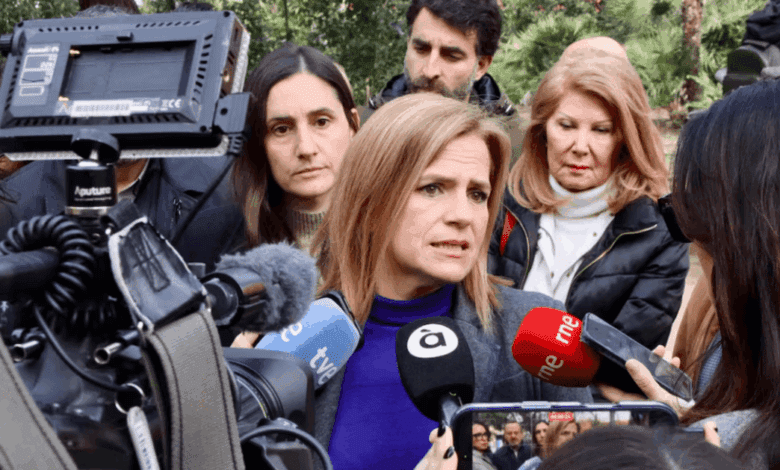
Within the shareholding structure of Parque Central, the central administration owns half, while the remaining shares are divided between the Generalitat and the municipality. Valencia Mayor María José Catalá stated that all agenda items need to be clarified in advance to avoid misunderstandings. She emphasized that consensus has always been reached in similar situations and expressed hope for a swift resolution to the disagreements.
Meeting details
Catalá noted that neither the city nor the region had received written clarifications on key issues, including the appointment of a new board member. To approve the state’s candidate, a simple majority is sufficient, meaning the support of both the municipality and the Generalitat. The mayor declined to comment on whether she would personally support Bernabé’s candidacy, citing the need for further negotiations.
The agenda also included the creation of an expert committee to evaluate proposals for the construction of a new central station. According to Catalá, the relevant specialists have already been invited to take part in the process.
Position of the regional authorities
The Vice President and Head of the Department of Environment and Infrastructure of the Valencian Community, Vicente Martínez Mus, supported the decision to postpone discussion of contentious issues. He emphasized that the lack of information hinders well-informed decision-making, and that cooperation should remain the main guiding principle of the organization. In his view, the temporary suspension will not affect Parque Central’s strategic objectives.
At the same time, representatives of the central government regarded the situation as an unprecedented crisis in the history of such organizations. They believe that the attempt to block the appointment of a board member is a phenomenon not only new to Valencia, but to the whole of Spain. According to them, similar situations have not arisen in other comparable entities, and decisions have always been made based on partners’ proposals.
Context and similar cases
In recent years, Spain has repeatedly witnessed disputes between various levels of government over the management of major infrastructure projects. For instance, in Madrid and Barcelona, discussions concerning the distribution of authority and the appointment of representatives to management boards have led to delays in implementing key initiatives. In some cases, this has caused temporary suspensions of work or a review of cooperation terms. Such conflicts often spark public debates about the transparency and effectiveness of state and municipal company governance. As a result, even short-term disagreements can significantly impact the timing and quality of urban transformation projects.