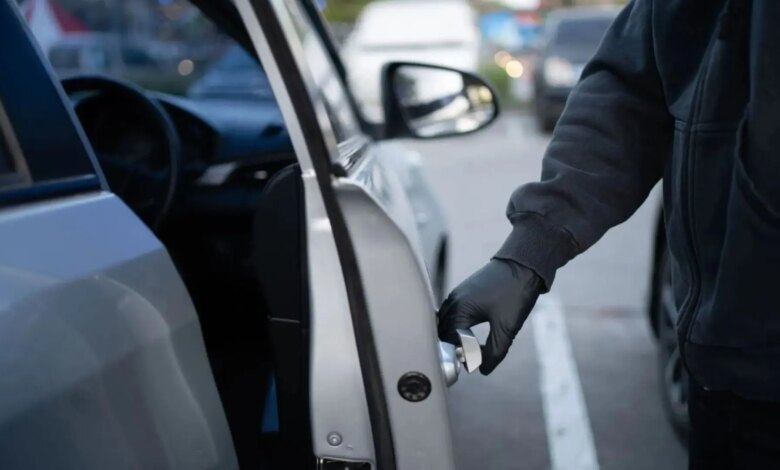
Losing your car today can happen in just a matter of minutes, and the owner often finds out too late. In 2025, nearly 25,000 car thefts were registered in Spain, and this statistic is alarming not only because of the numbers but also because of how quickly criminals’ methods are evolving. Modern car theft schemes are becoming increasingly sophisticated, and the consequences for owners are ever more severe. Drivers are facing a reality where even the most familiar security measures prove powerless.
In recent years, criminals have moved far beyond brute-force break-ins. Now they act almost invisibly, using technology that lets them access vehicles without leaving a trace. This not only complicates the search for and recovery of stolen cars, but also calls into question the reliability of standard anti-theft systems. As a result, many car owners lose their vehicles without even realizing it until it’s too late.
An invisible threat
The most common method of theft today involves special devices that block the signal from a remote key. When the driver leaves the car and presses the lock button, the signal simply never reaches the locks. The car remains open, while the owner believes everything is secure. Criminals calmly wait for the right moment to take the vehicle, leaving no visible signs of tampering.
Such thefts most often occur in busy areas—shopping mall parking lots, tourist zones, and near office buildings. Drivers often rush about their business without manually checking their doors, making them easy targets for those equipped with modern electronic tools. As a result, even new cars with advanced security systems become vulnerable.
Electronic traps
The second most common scheme is key signal copying. Using portable devices, criminals intercept the code transmitted by the key fob and use it to unlock and start the car. The whole process takes just seconds and requires no physical contact with the vehicle. The owner may not even realize their key was ‘read’ from a distance.
This technology is especially dangerous for owners of modern models that use ‘keyless entry.’ Even if the car is locked, criminals can gain access without breaking locks or smashing windows. As a result, traditional security methods lose their relevance, leaving car owners in a vulnerable position.
OBD port: the Achilles’ heel
The third most common tactic involves using the OBD diagnostic port. Normally, this port is intended for vehicle maintenance and diagnostics, but in the hands of criminals, it becomes a tool for reprogramming keys and disabling factory security systems. Once inside the car, they can neutralize the electronic barriers in just a few minutes.
This method requires certain technical expertise, so it is most often used in targeted thefts of expensive or popular models. Criminals study the owner’s habits in advance, choose the right moment, and act quickly and in a coordinated way. After such interference, the car vanishes without a trace, and recovery becomes nearly impossible.
Planning and Surveillance
Most successful thefts are the result of careful planning. Criminals observe potential targets, analyze routes, parking times, and parking characteristics. Cars left unattended for long periods—such as those in airport lots or residential neighborhoods of large cities—are especially vulnerable.
Not only private vehicles are increasingly at risk, but also company cars, taxis, and car sharing vehicles. Drivers rarely consider that their car could become a target if it repeatedly appears in the same location. This approach allows criminals to act as efficiently as possible and minimize the risk of being noticed.
Chances of Recovery
One of the main problems is the late discovery of the theft. Since modern methods leave no visible traces, owners often realize their car has been stolen only when they are about to use it. By that time, criminals may have already transported the vehicle to another region or even abroad, dismantled it for parts, or altered its identification numbers.
Experts note that the first hours after a theft are crucial. If the owner immediately contacts the police and activates tracking systems, the chances of recovery increase. However, in most cases, time works against the victims, and the clearance rate for such crimes remains low.
LoJack is an international company specializing in vehicle recovery and anti-theft technologies. Over the years, the brand has become synonymous with innovation in transport security. In Spain, LoJack actively collaborates with police and fleet operators, implementing systems that allow vehicles to be tracked in real time. Thanks to its proprietary technologies, the company helps owners recover their cars even in the most complex cases, and also analyzes new criminal schemes to warn about risks in advance. In recent years, LoJack has placed special emphasis on educating drivers and raising awareness of modern threats, making it one of the key players in the vehicle anti-theft technology market.