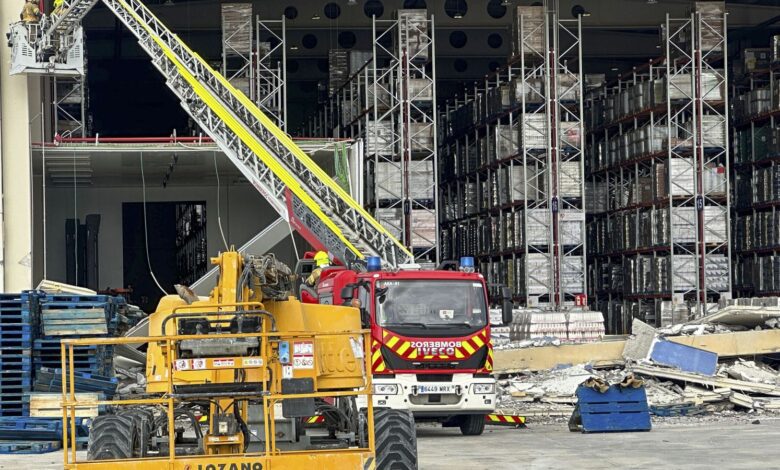
The aftermath of the devastating storm in Andalusia is already being felt across Spain: tens of thousands of workers have lost their jobs or income, and entire industries are on the verge of shutting down. The future of thousands of families and businesses is now the subject of urgent talks between unions and authorities. Without emergency measures, the region could face the largest wave of job losses in recent years.
A chain reaction in the economy
According to union estimates, between 60,000 and 70,000 people have already experienced a complete or partial halt of activity due to the disaster. Disruptions in the agricultural sector immediately affected the entire supply chain: processing plants, warehouses, and logistics companies came to a standstill. As a result, the damage spread far beyond agriculture, hitting related sectors and suppliers.
Authorities and business representatives are urgently discussing possible support measures. In some areas, the situation is so critical that restoring infrastructure and restarting production may take weeks. Preserving jobs and preventing mass layoffs has become the central issue at meetings involving the autonomous government and the largest trade unions.
Problems across different provinces
In the coastal areas of Almería and Granada, hundreds of hectares of greenhouses have been damaged, leaving thousands of workers without their usual employment. In Huelva, where the berry harvesting season has just begun, losing several weeks of work could lead to early termination of contracts for tens of thousands of temporary employees. In Cádiz, leather goods workshops have come to a halt, and hundreds of workers were unable to report for their shifts. The cut flower sector is also at risk: hundreds of jobs may disappear in the coming days.
In the Guadalquivir Valley, damage to irrigation systems threatens to reduce the number of seasonal workers by 20% next season. In Jaén and Córdoba, olive harvest losses have reached a third of the expected volume, resulting in tens of thousands of lost workdays. If the situation does not improve, olive processing facilities may be forced to temporarily suspend operations.
Union demands
Trade unions are calling for the immediate introduction of special support measures similar to those implemented during the pandemic. Proposals include reducing the minimum number of workdays required to receive subsidies, temporary employment schemes, and flexible conditions for businesses unable to quickly resume production. Particular attention is being given to protecting the most vulnerable groups: seasonal workers and employees with unstable contracts.
Union leaders emphasize that the crisis must not lead to a social catastrophe. They are calling on regional and national authorities to set up a working group to analyze the situation and develop solutions. They cite the experience of the pandemic, when temporary employment schemes helped save hundreds of thousands of jobs and support businesses.
Business stance and outlook
Employer representatives are also advocating for urgent measures: temporary layoffs, tax breaks, and reduction of social contributions. They believe that only a comprehensive approach can minimize losses and speed up economic recovery. The scale and timing of support remain uncertain—much depends on decisions by the central authorities and the pace of infrastructure restoration.
In the coming weeks, it will become clear whether mass layoffs and business closures can be avoided. The economic fate of entire regions now depends on coordinated actions by authorities, businesses, and trade unions.
In recent years, Andalusia has already faced the consequences of extreme weather events, which have resulted in temporary production stoppages and significant losses in the agricultural sector. Similar situations occurred in other regions of Spain, where heavy rains and storms prompted the introduction of temporary employment schemes and special subsidies to support those affected. Past experience shows that timely action can significantly reduce socio-economic damage and speed up the recovery of regions after natural disasters.