A Sunday evening in southern Spain turned into a tragedy no one saw coming. A modern train, freshly serviced, and a newly upgraded rail line—seemingly perfect conditions for a safe journey. Yet, it was here, on the stretch between Madrid and Andalucía, that one of the deadliest rail accidents in recent years occurred. In a collision involving two trains—one operated by the Italian company Iryo and the other by Spain’s Renfe—dozens of people lost their lives, and the number of injured surpassed 150. The disaster has raised critical questions about infrastructure, operators, and the effectiveness of existing safety systems.
A showdown on the rails
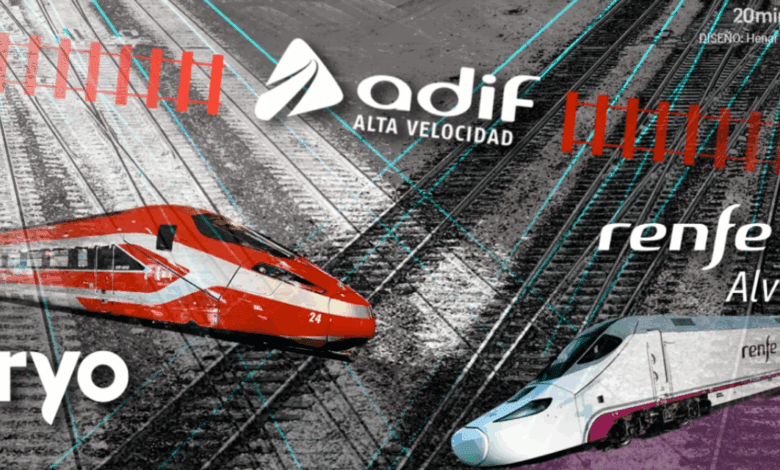
At the heart of this tragedy are three key players in Spain’s rail sector. First is Iryo, the Italian high-speed rail operator that burst onto the Spanish market just a few years ago. Second is Adif, the state-owned company responsible for managing the nation’s rail infrastructure. Third is Renfe, the historic Spanish carrier whose Alvia trains have long been a staple for millions of passengers.
The Iryo train that departed from Málaga to Madrid was practically brand new—it was built in 2022, and its last inspection had taken place just four days before the tragedy. The trainset consisted of Frecciarossa carriages assembled at the Hitachi plant near Florence. Iryo, 51% owned by the Italian government, has been rapidly expanding in Spain since 2019, focusing on comfort and premium service. Yet it was precisely their carriages that were at the epicenter of the disaster, sustaining the most damage and causing the majority of fatalities.
Hidden rivalry
Despite entering the market later than French Ouigo and Spanish Renfe, Iryo quickly carved out its own niche. The company preferred to stay out of the spotlight, avoiding public disputes with competitors and the Ministry of Transport. Unlike Ouigo, which frequently became embroiled in high-profile arguments, Iryo built its reputation on quality and reliability. But the accident in Adamuz thrust it into the public eye—whether it wanted it or not.
Iryo’s fares have always been slightly higher than those of its competitors, but its service has been positioned as more upscale. Nevertheless, the tragedy underscored that even the most modern trains and strict regulations cannot guarantee absolute safety. Questions about technical conditions and traffic organization are now growing louder.
Railway owner
Adif is the state giant that manages over 15,000 kilometers of railway and nearly 1,500 stations nationwide. This company is responsible for the condition of the tracks, switches, signaling systems, and all related infrastructure. After the 2005 reform, when European regulations required the separation of operators and infrastructure owners, Adif became the pivotal player on whom the safety of all operators—Renfe, Ouigo, Iryo—depends.
In recent years, Adif has actively invested in upgrading the tracks, especially on the Madrid-Sevilla and Madrid-Barcelona lines. Modernizing just the first route cost 700 million euros. The very stretch where the disaster occurred was completely renovated just a year before the tragedy. However, despite the vast investments, train drivers’ unions repeatedly warned about ongoing issues: vibrations, wear, and speeding. Their calls to reduce the maximum speed to 250 km/h went unanswered.
A shadow of corruption
Adif has repeatedly found itself at the center of scandals over the distribution of multi-billion euro contracts. Recent investigations have led to charges against former company executives suspected of fraud and contract rigging. In the wake of the Adamuz tragedy, these stories take on new significance: how effectively and honestly are public funds being spent if such accidents still occur even on upgraded lines?
The Spanish giant
Renfe stands as a symbol of Spain’s railways—a company with a century-long history and an extensive fleet of trains. Its Alvia service combines high-speed and conventional rail segments, allowing travel to even the most remote corners of the country. In recent years, Renfe has been forced to compete with foreign operators, lower its prices, and fight for passengers. But the accident in Adamuz revealed that even experience and tradition can’t always prevent disaster.
The Alvia train, which set out from Madrid to Huelva, was at the very center of the collision. The first two cars were literally thrown off the rails and slid down a four-meter embankment. Renfe’s management immediately stated that their train was not the cause of the accident, placing responsibility either on Iryo or on infrastructure. But for the victims and their families, these details no longer matter.
The market and accountability
The liberalization of Spain’s high-speed rail market has brought in new players, lowered prices, and increased competition. But this has also made the system harder to manage: each operator is responsible only for its own segment, and overall safety falls through the cracks. Renfe still controls two-thirds of the market, but is now required to operate unprofitable routes that private companies have no interest in.
Authorities are proud of record investments in the rail network, but the tragedy in Adamuz has sent a sobering warning: money and technology do not always go hand in hand with safety. Spanish society is demanding answers—not just about who’s at fault, but about how such disasters can be prevented in the future.