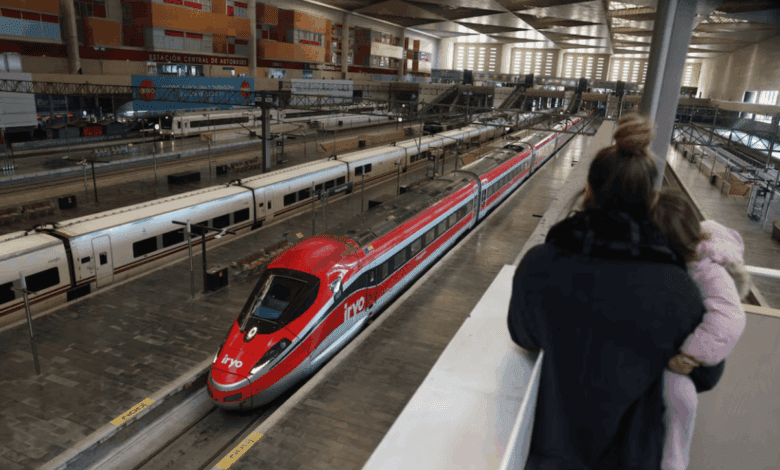
The sudden suspension of direct rail service between Madrid and Málaga has dealt a blow to the Costa del Sol’s economy. The region’s tourism sector is facing serious challenges: the train cancellations coincide with preparations for the most important events of the year. According to El Pais, losses have already surpassed hundreds of millions of euros, and the prospects for restoring train traffic remain uncertain.
Causes of the transport collapse
Since early February, the railway line has been blocked due to a landslide near Álora caused by heavy rains. Previously, in January, service was already interrupted following an accident in Adamuz. As a result, private operators Ouigo and Iryo have cancelled all trains until the end of March, while Renfe has maintained only limited connections with a bus transfer in Antequera. For passengers, this means extra inconvenience and loss of time, while for businesses it leads to a decline in customer flow.
The situation is worsened by the fact that tickets for trains until March 23 are virtually unavailable and alternative routes cannot meet demand. Many travelers are cancelling their trips, wary of layovers and delays. Tourism companies report that hotel bookings on the Costa del Sol have dropped by almost a third. Event organizers are being forced to seek emergency solutions to keep visitors’ plans on track.
Impact on major events
The problem has been felt especially acutely in preparations for the Málaga Film Festival, which begins on March 6. More than 4,000 guests were expected, most of whom usually arrive from Madrid by train. Now, organizers are forced to rely on charter flights and private transport to ensure participants can attend. Despite the difficulties, organizers insist that the event will go ahead in full.
An even bigger challenge lies ahead with the upcoming Semana Santa — the annual week when up to a million people visit Málaga. According to local authorities, transport-related losses in February and March alone have exceeded 100 million euros, while business representatives put the figure at 300 million. Officials and business owners are demanding urgent action and accuse the government of neglecting infrastructure.
Reactions and Debate
In response to criticism, government officials note that rail connections have not been completely cut: Renfe continues to transport passengers with a bus transfer. However, many residents and tourists find this option inconvenient and unappealing. Authorities promise that service will be restored no earlier than March 23, but there is no confidence in this date.
The tourism sector fears that uncertainty will further reduce interest in the region. Families and companies are already choosing alternative destinations for holidays and business trips. According to RUSSPAIN.COM, similar transportation difficulties have recently occurred in other regions of Spain, where special bus routes were set up for major events, as was the case in Barcelona during large concerts.
Context and consequences
In recent years, infrastructure disruptions have increasingly become a cause of economic losses for Spain’s tourist regions. Heavy rains, landslides, and railway accidents lead to train cancellations and widespread service interruptions. In 2024, similar problems were observed in Andalusia and Catalonia, where adverse weather temporarily halted transport between major cities. Each time, this triggered a wave of canceled bookings and declining revenues in the hotel and restaurant sectors. Experts note that the lack of backup routes and insufficient investment in infrastructure maintenance are making such situations increasingly likely.