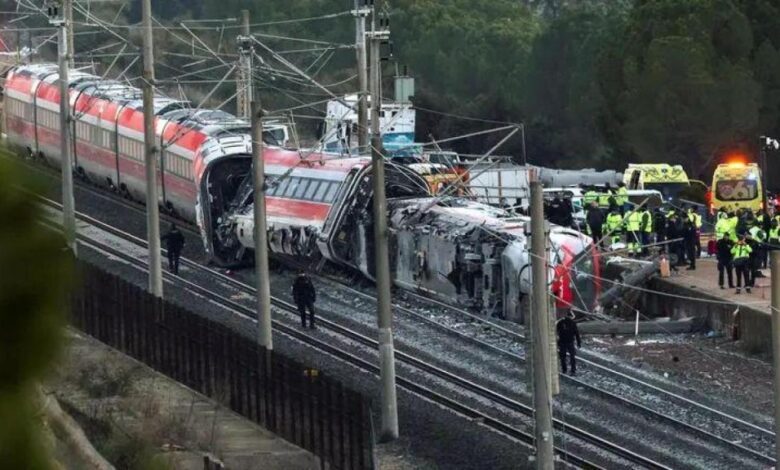
Tensions continue to mount in Spain over one of the most mysterious railway disasters in recent years. After the Iryo train crash near Adamuz, which claimed 45 lives, the investigation is revealing more and more details that call into question the country’s conventional notions of railway safety. Officials and experts remain divided: what was the real cause of the tragedy that shocked the nation?
From the very first days after the accident, public attention has focused on the condition of the rail track. Experts have confirmed that the rail on which the ill-fated train was traveling was damaged even before the Iryo train entered that section. Moreover, an inspection of the wheels of several trains that had previously passed along the line revealed identical marks—deep dents on the metal. This finding sparked a wave of questions: why did such a serious fault go unnoticed, and who was responsible for preventing the disaster?
Malfunction or negligence
Laboratories are already examining samples of the damaged rail to determine what exactly caused its failure. Possible explanations include simple negligence during maintenance, hidden metal defects, and the impact of weather conditions. Unexpectedly, it was revealed that some of the rails in this section were laid back in 1992, when the Madrid–Seville line opened. Despite a recent modernization completed in May 2025, old components are still present on the tracks, and they may have played a fatal role.
The head of the railway company admitted that not all sections were renewed and some rails remained from previous repairs. The transport minister has also not ruled out a manufacturing defect, hinting at possible issues with the supplier—ArcelorMittal. However, the manufacturer’s representatives insist it’s too early to draw conclusions until all tests are completed. Meanwhile, samples have already been sent to the lab for metallographic analysis, which should shed light on the true causes of the failure.
Warning signs
The operation of the safety system has drawn particular attention. It turned out that train sensors detected anomalies in this section even before the tragedy. With each passing train, new bumps appeared on the rail, becoming more and more noticeable. However, the alert level never reached the critical threshold, and automatic safety protocols were not activated. Why the system failed to respond remains another unanswered question.
It also emerged that three of the new diagnostic trains intended to inspect track conditions had not yet been put into operation. Nevertheless, officials were quick to deny any reports of technical failures, dismissing them as rumors. However, two Renfe trains that traveled this route shortly before the accident also suffered wheel damage, confirming that the issue with the rail arose well before the fatal day.
The mystery of the collision
The moment of the collision itself also raises many questions. According to official data, only 9 seconds passed between the derailment of the Iryo train and its collision with another train. In the recordings of the driver’s conversations with dispatchers, there is no mention that he noticed the approaching Alvia train. Furthermore, when the driver reported the incident, the second train had already cleared the dangerous section, and darkness still shrouded the accident site.
Passengers and experts alike are puzzled: how could the driver have failed to notice another train, and why did the control system not warn of impending danger? The questions keep multiplying, while the answers only seem to complicate matters further. Authorities promise a thorough investigation, but so far the inquiry resembles a detective story full of unexpected twists.
The missing train
Another mystery is the disappearance of the Alvia train for a full 30 minutes. The control center in Madrid (Atocha) did not immediately grasp what had happened: the train was stationary, but no one knew the reason for the stop. Only half an hour later was one of the drivers instructed to go searching with a flashlight in hand. Official representatives claim that information about the disaster was relayed to emergency services without delay, yet the exact time the first cars were found after plunging down the four-meter embankment has still not been disclosed.
This entire story raises plenty of suspicions and public debate. Why did such a serious accident go unnoticed for so long? Who is responsible for the delay and shortcomings in the alert system? The answers to these questions could reshape attitudes toward railway safety in Spain.
Operators out of play
Interestingly, the third major high-speed operator — Ouigo — was not involved in the tragedy. The company had suspended train service on the Madrid–Andalusia route several days prior to the accident, citing internal reasons. Whether it was a coincidence or a premonition is now a topic of discussion among not just experts, but also regular passengers.
The investigation continues, and the public awaits new revelations. Each day brings fresh details that only deepen the intrigue surrounding this mysterious and tragic story.