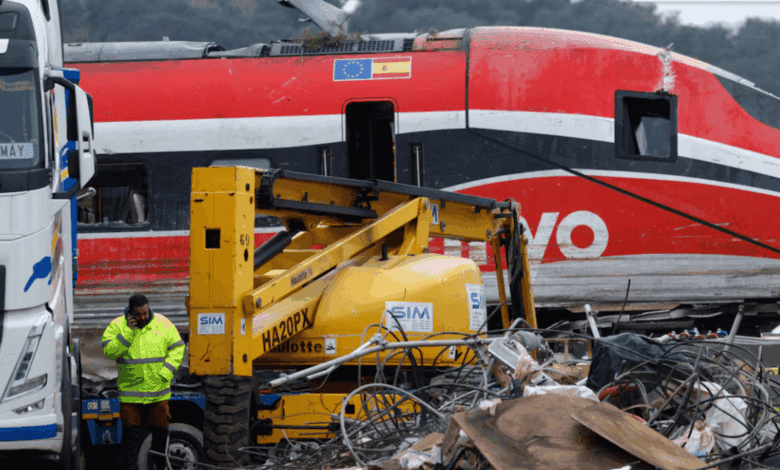
Life in the small town of Adamuz near Córdoba has come to a standstill after a devastating train disaster. The site of the tragedy, where two high-speed trains collided, has now been cleared—all investigators and technical experts have completed their work on the ground. Yet questions are only multiplying: how could it happen that the safety system, designed to prevent such horrors, failed at the crucial moment?
In the spotlight is the mysterious LZB, a German train control system that should have automatically halted the train at the slightest threat. It’s now under the microscope of experts, who are attempting to reconstruct the exact sequence of the fateful collision through its digital traces. According to specialists, LZB can record speed, distance, and track conditions, and instantly activate emergency braking if needed. But this time, the technology was powerless: the collision happened so fast that the automatic system didn’t even have time to engage.
Shadows on the Rails
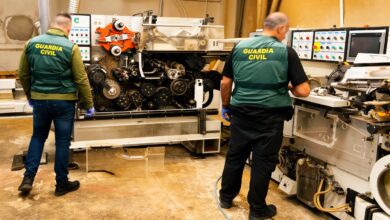
Investigators are now piecing together every digital and physical trace left after the accident. The commission has at its disposal footage from surveillance cameras that, inconveniently, weren’t pointed directly at the tracks, as well as the emergency calls made by engineers and conductors in the final seconds before the catastrophe. Added to these are data from lateral displacement sensors, marks on the sleepers and rails, and impressions on the train wheels.
Special attention is drawn to the LZB system, which, despite its reputation, failed to prevent the tragedy. This system was introduced in Spain back in the 1980s for the high-speed Madrid–Seville line, but is now considered outdated and is gradually being replaced by the more modern ERTMS. However, on the section where the accident occurred, LZB was still in operation, and now its data must shed light on where and why the train derailed.
Technical labyrinth
Experts are working to reconstruct a detailed chronology of events, comparing every possible record and testimony. At their disposal are not only digital traces, but also physical evidence: fresh cracks on newly laid rails, marks on old sleepers, as well as metal samples sent for laboratory analysis. The intrigue deepens with the fact that it was the new rail, installed just a few months earlier, that turned out to be the weak link—even though some elements on this section had been in service since 1992.
There are more and more questions: why did the new rail fail under load, what role did human factors play, and could the more modern ERTMS have prevented the disaster? Investigators are in no hurry to draw conclusions, as every detail could prove decisive. Ahead lies a complex examination in Madrid, where experts, law enforcement representatives, and a judge will study fragments of the damaged track.
Changing of the era
While the investigation stalls, Spain’s railway sector is at a turning point. The LZB system is being replaced by second-level ERTMS—a system recognized as the most reliable in the world and approved by the European Union for all high-speed lines. Authorities have already invested hundreds of millions of euros in upgrading the infrastructure, but the tragedy in Adamuz revealed that change is not happening as quickly as hoped.
Companies operating in the passenger transport market were forced to invest millions in retrofitting their trains with outdated systems to meet safety requirements on old sections. But even these measures could not prevent disaster. Now all eyes are on the results of the investigation: will it be possible to determine what exactly was the final straw in this chain of fatal coincidences, and will this catastrophe change the country’s approach to railway safety?
Questions without answers
As experts analyze the data and laboratories examine the metal of the new rails, public anxiety is growing. Why did such an expensive and meticulously modernized infrastructure prove so vulnerable? What role did technical failures play, and where did human error come into play? And most importantly, can new technologies truly protect passengers from such tragedies in the future?
Soon, the court in Montoro is expected to initiate a key forensic examination that could finally put the matter to rest. But for now, all that can be done is to wait and hope the answers are not even more alarming than the questions themselves.