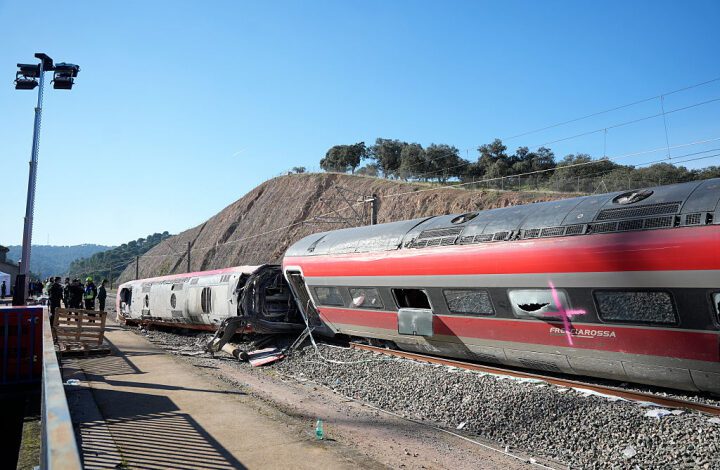
The railway tragedy in Adamuz has become one of the most discussed events of the year, affecting thousands of families across Spain. Questions about infrastructure quality and the authorities’ actions have become particularly acute after the deaths of 45 people. Every new fact that appears in the public domain impacts trust in the safety system and sparks heated debates about how such an incident could occur in modern Spain.
Transport Minister Óscar Puente found himself in the spotlight after issuing a series of rebuttals regarding widespread rumors and speculation about the causes of the disaster. On social media and in the press, there was active debate over claims that the railway section where the derailment occurred had allegedly never been fully modernized. According to the minister, the line did undergo a comprehensive upgrade, but not all components were replaced—some infrastructure dated back to its original construction in 1989. Puente emphasized that ‘integral modernization’ does not always mean replacing absolutely everything, but only those parts that raise technical concerns.
Technical disagreements
However, not all experts agreed with this interpretation. Ignacio Barrón, head of the commission investigating railway accidents, expressed surprise that a full reconstruction had not been carried out. Internal documents from the railway operator Adif also indicate that a “full modernization” implies replacing all components, which did not happen in this case. This nuance prompted new questions for the ministry and sparked a wave of criticism within the professional community.
Particular attention was drawn to information about the condition of the rails at the site of the derailment. The minister claimed the damaged rail was new, produced in 2023 and installed in 2025. However, it turned out the accident occurred at the junction between the new rail and an old one, which had been in place since 1989. Questions also arose about the welding technology: despite official assurances that the work met standards, Adif admitted that during repairs, their own regulations were not strictly followed.
Organizational changes
Amid the heated debate over the causes of the tragedy, another contentious issue emerged—the dissolution last summer of the emergency response unit responsible for prevention and infrastructure safety. Officially, this was described merely as a renaming of the division, with responsibility for rail safety oversight transferred to other agencies. Nevertheless, this move raised concerns among some experts, who believe that such changes might have impacted response efficiency in critical situations.
There was also disagreement between the ministry and Adif regarding the timing of key inspections on the affected section. The minister insisted that the first warning signs about the rails appeared only an hour before the catastrophe, suggesting that earlier checks could not have prevented the tragedy. Meanwhile, representatives of the infrastructure company maintained that scheduled inspections were carried out regularly but did not specify whether any irregularities had been detected.
Inspections and resources
The investigation revealed that Adif operates six specialized trains for track diagnostics, but some were under repair or undergoing certification procedures. This fact sparked further debates about the adequacy of resources and the effectiveness of safety oversight for the rail network.
Another topic of discussion was the information about a supposedly dangerous section between Logroño and Haro. Officials denied reports of any risk, explaining that construction work is currently underway on this stretch, and train services are temporarily suspended. Nevertheless, the mere appearance of such rumors reflects a high level of anxiety among passengers and industry workers.
Context and consequences
In recent years, Spain has faced several major railway accidents, each sparking public outcry and prompting a review of safety standards. After the tragedy in Galicia in 2013, requirements for technical inspections and infrastructure upgrades were tightened, but new incidents show that problems still persist. Concerns about repair quality, transparency of procedures, and accountability of authorities remain in the spotlight, and every new incident triggers large-scale inspections and discussions at the national level.