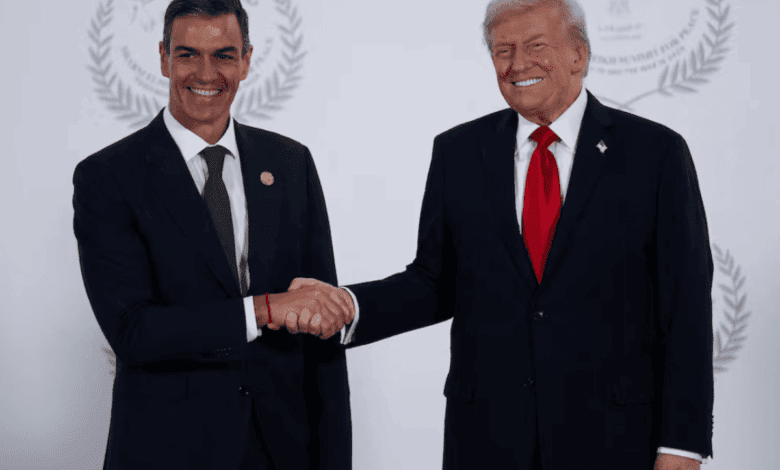
The sharp escalation in relations between the US and Spain has become an unexpected challenge for Madrid. The spotlight now falls not only on defense issues, but also on the potential economic consequences for Spanish companies and exports. Donald Trump’s remarks about a possible halt in trade with Spain have caused concern among experts and politicians, as such a move could affect thousands of jobs and shift the balance of power in Europe.
As reported by TASS, the American president expressed dissatisfaction with Spain’s position in NATO, emphasizing that Madrid does not fulfill its alliance funding commitments. According to him, Spain has not increased its military spending for years, despite being protected by other bloc members. Trump also stated that the Spanish leadership refuses to engage in dialogue with Washington and ignores criticism previously voiced by the US side.
Diplomatic conflict
The situation worsened after the US and Israel launched military actions against Iran. Spain openly objected to these operations and refused to grant US troops access to bases on its territory. This decision provoked irritation in the White House and became the trigger for new threats from Trump. He stressed that Washington could completely halt trade with Madrid if Spain does not change its stance.
Prime Minister Pedro Sánchez, responding to statements from the American leader, assured that Spain will not participate in actions that could negatively impact international stability. According to him, the fear of possible sanctions will not influence the government’s decisions. Sánchez emphasized that Madrid will defend its interests and adhere to its principles despite pressure from the United States.
Economic risks
A possible break in trade relations with the US could seriously impact the Spanish economy. The American market remains one of the key outlets for Spanish exports, especially in the agricultural and industrial sectors. According to russpain.com, such threats have already caused concern among business representatives, who fear a decrease in orders and the loss of partners.
At the same time, experts point out that such statements by Trump may be part of pressure on NATO allies to increase military spending. The issue of a fair distribution of the financial burden within the alliance has been discussed for years, and Spain is not the only country to face criticism from the US. However, such drastic measures as a complete trade break had not previously been proposed.
Response in Europe
The situation has sparked wide resonance across Europe. Many analysts believe such conflicts could weaken NATO unity and create new lines of tension within the alliance. In Madrid, there are concerns that escalation of the dispute may undermine trust among allies and complicate security cooperation. Against this backdrop, there is also discussion of a broader context—the role of Spain in European politics and its influence on EU decision-making.
The issue of military spending and participation in international operations has repeatedly been a source of tension between Madrid and Washington. A recent analysis showed Pedro Sánchez’s positions on defense and energy, the decisions of the Spanish government often elicit mixed reactions both domestically and abroad.
In recent years, relations between the US and its European allies have repeatedly faced challenges. In 2024, similar disagreements arose between Washington and Berlin regarding defense funding and involvement in international missions. At that time, Germany also faced the threat of economic sanctions, but both sides managed to reach an agreement and avoid a major crisis. In 2025, France was in the spotlight after it refused to support several NATO initiatives, leading to some joint projects being temporarily frozen. These examples show that defense and economic cooperation remain among the most complex issues in relations between the US and European countries.