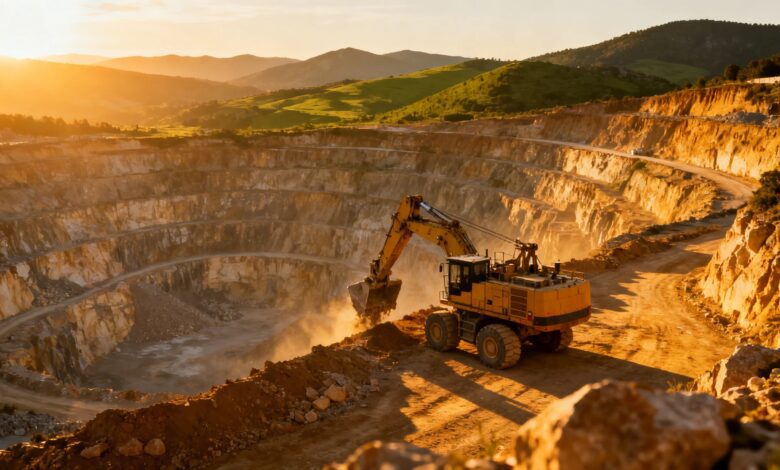
The sharp rise in tungsten prices and supply disruptions from China are directly affecting Spain’s industry and defense sector. As Europe seeks to reduce its dependency on foreign suppliers of strategic metals, Spanish deposits are coming into the spotlight. This presents not only an opportunity for Spain’s economy but also a chance to strengthen its position in the global raw materials market.
Tungsten, also known as wolfram, is used in the production of weaponry, electronics, and industrial tools. Over the past year, its price has increased more than fivefold, primarily due to export restrictions from China. According to Bloomberg and Fastmarkets, a ton of the metal now costs around $2,250, with China controlling nearly 80% of global production. After Beijing introduced new export regulations in February 2025, supply volumes dropped by 40%. This measure, taken in response to US trade actions, has raised concerns among European manufacturers, who find themselves in a vulnerable position.
Geopolitics and military conflicts
The escalation in the Middle East after the US and Israel struck Iran on February 28 has boosted demand for tungsten for defense purposes. This metal is essential in the production of ammunition, armored vehicles, and aircraft due to its density and strength. Increased military orders led to a further surge in prices: according to Fastmarkets, the price of APT (ammonium paratungstate) jumped from $900–940 to $1,650–1,900 per tonne in just a month. The price of ferrotungsten, used in alloys for the defense industry, also rose nearly fivefold in a year.
The tungsten market is marked by limited supply and low liquidity. European and US companies are forced to seek alternative sources, ramp up recycling, and launch new projects. However, China remains in a position to influence pricing, posing ongoing risks to supply stability.
Spain: new opportunities
Against the backdrop of a global shortage, Spain is emerging as one of Europe’s key players. The country now ranks third in tungsten production in the EU and is actively involved in the European Commission’s initiative to reduce dependence on external suppliers of critical minerals. Authorities are preparing an Action Plan for sustainable management of mineral resources for 2026–2030, aimed at increasing strategic autonomy, accelerating decarbonization, and supporting industrial competitiveness.
This policy paves the way for investment and the revival of mining projects. As demand for tungsten rises and geopolitical tensions persist, Spanish deposits are becoming increasingly valuable for European supply chains. Among them, the Barruecopardo mine in Salamanca stands out—it resumed operations in 2019 and has reserves exceeding 10 million tonnes of ore. In Galicia, the A Gudiña (Pentes) mine, managed by a Swedish company, holds reserves of about 60,000 tonnes. New projects are underway in Castilla-La Mancha and Extremadura, which could strengthen Spain’s position in the market.
Economic impact and outlook
The rise in tungsten prices is already affecting related industries—from engineering to electronics. Spanish manufacturers have an opportunity to fill the gap left by reduced Chinese supplies. However, to seize this chance, it will be necessary not only to boost extraction but also to invest in processing and innovative technologies. According to russpain.com, interest in Spanish deposits from European and American companies continues to grow, which may lead to new jobs and the development of infrastructure in mining regions.
In recent years, Europe has faced similar challenges in the lithium and rare earth metals market, where disruptions in overseas supplies led to price surges and a search for alternative sources. In 2024, a comparable situation arose with graphite, prompting the EU to fast-track the launch of domestic projects. Experience shows that countries able to quickly adapt to new conditions gain a competitive edge and strengthen their economic security.