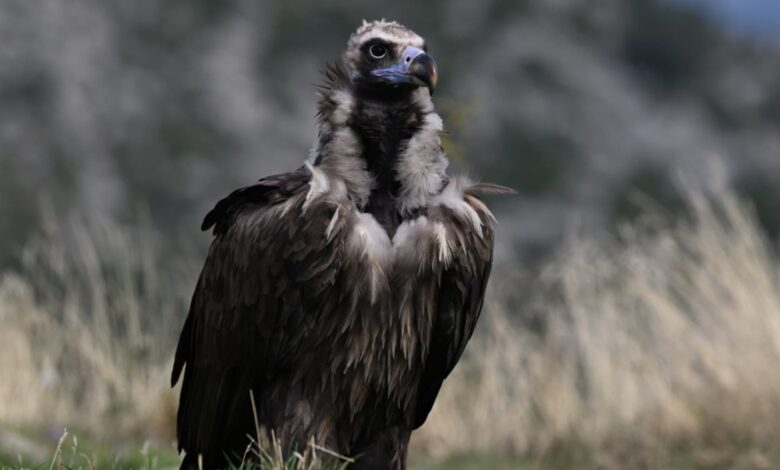
Catalonia has seen a significant shift in the black vulture (Aegypius monachus) population structure—this rare bird of prey disappeared from the Pyrenees as far back as the 19th century. In 2025, the Boumort reserve, located between Pallars and Alt Urgell, saw the hatching of 13 chicks. This is a record number in recent years and a key indicator for Spain’s entire conservation network. According to El Pais, 67% of all vultures living in this colony were actually born here, not brought in from elsewhere. This result shows that the species restoration project is bearing fruit and shifting the region’s ecosystem balance.
Last year, Boumort was home to 66 black vultures, with 19 pairs forming nests. Of the 13 chicks that hatched, 12 successfully fledged, while one disappeared from the nest on its 84th day. The entire population is divided into two groups: 40 birds are resident in the reserve, while 26 are considered “floaters”—they move between different territories. Of the total, 44 birds were born in the colony itself, 14 were introduced as part of the reintroduction program, and another eight arrived from other regions of Spain and France.
Population growth
The breeding success in 2025 was above the 15-year average: 71% of chicks were able to fledge, and productivity reached 63%. According to experts, this is due to the gradual increase in the proportion of local birds in the colony and a decrease in the number of translocated individuals. The older vultures, introduced in the early stages of the project, are gradually leaving, making way for younger birds born in Boumort itself. This strengthens genetic diversity and reduces the risk of species extinction in the region.
The black vulture restoration project began in 2007 with support from the Catalonian government and private companies. Its goal is to establish a stable population to link the French colonies with the main vulture groups in central and southwestern parts of the Pyrenean Peninsula. Over this period, the project has not only succeeded in reintroducing the species to the wild but has also made Boumort one of the key breeding sites for these birds.
Ecological role
The black vulture is one of four scavenger species found in Europe. Alongside the griffon vulture, the Egyptian vulture, and the bearded vulture, it plays a vital role in maintaining ecosystem balance. These birds clear animal remains from the fields, reducing the risk of disease spread and cutting CO2 emissions by eliminating the need to burn carcasses. In 2025, more than 15 tons of carrion were distributed in Boumort, resulting in a saving of over 4 tons of carbon dioxide.
To support the population in the reserve, special feeding stations—PAS and PAE—are in operation. They are located in Pallars Jussà, Alt Urgell, and Boumort itself. Trenca Foundation staff regularly supply food here to support the birds during the breeding season and to track their movements. Thanks to these measures, the proportion of young griffon vultures born in the colony is increasing, and monitoring the population’s status has become easier.
Monitoring and migration
In 2025, experts continued to track vulture movements using GPS tags. This technology helps to identify new migration routes and respond promptly to potential threats. One young vulture headed toward Africa but changed course and ended up on the coast of Mauritania. Another, nicknamed Cauba, made a long journey to Extremadura before returning to Boumort, making short trips across the north of the country.
According to El Pais, the project to restore the black vulture in Catalonia has already been recognized as one of the most successful in Europe. In the coming years, there are plans to expand the birds’ habitat westward in the Pyrenees to create a unified network of colonies and ensure a sustainable future for this rare species.
In recent years, similar projects to reintroduce extinct species of birds of prey have been implemented in Spain and France. For example, in Aragón and Navarra, there has also been an increase in vulture populations thanks to reintroduction programs and the establishment of new feeding stations. In 2024, the Pyrenees recorded the first successful breeding of the bearded vulture after a long hiatus. These initiatives demonstrate that a comprehensive approach to biodiversity conservation yields tangible results and is reshaping the landscape of European ecosystems.