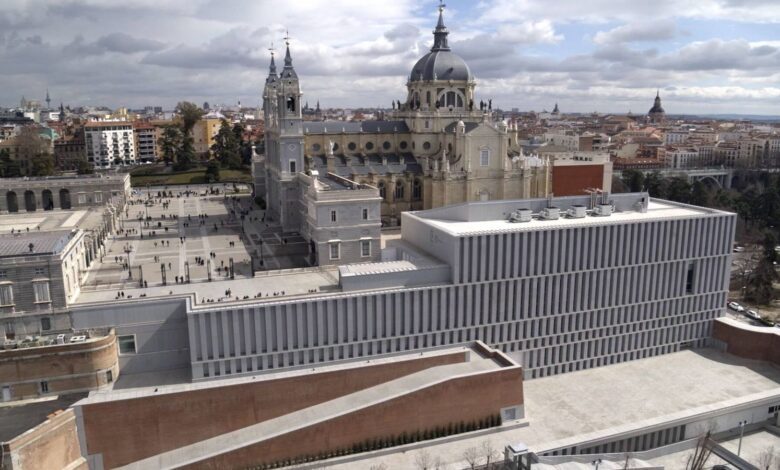
In Madrid, after a long hiatus, one of the most significant sculptural works of the Italian Renaissance is once again open to the public. This is the monumental 16th-century fountain, which now holds a place of honor in the Gallery of Royal Collections. The sculpture, created by Florentine master Giovanni Angelo Montorsoli, was acquired in Genoa specifically to adorn the royal gardens of Philip II.
For more than three centuries, the fountain graced the grounds of the garden at Madrid’s Casa de Campo, serving as a symbol of the Spanish monarchy’s artistic taste and political power. However, at the end of the 19th century, the sculptural ensemble was dismantled, and its elements were moved between various historic sites and the National Heritage storage facilities. Only in recent years has restoration been completed and the work returned to the museum setting.
For a long time, it was believed that the fountain was created during the reign of Charles I, since its composition was crowned by a double-headed eagle emblem associated with this monarch. However, modern research has confirmed that the work belongs to the era of Philip II and was part of a large-scale program to renovate Madrid carried out by the king in the 16th century.
The fountain is a complex multi-tiered composition featuring four basins and three sculptural groups. The lower octagonal pool is adorned with lion heads, masks, and representations of double-headed eagles. The central column is supported by three Tritons, with figures of nude men and children above, completing the architectural ensemble. Despite the loss of the original eagle, the fountain has retained its expressiveness and remains a vivid example of Italian influence on Spanish art.
Originally, the sculpture was located in the very center of the Casa de Campo gardens, where it remained from 1584 to 1890. After its dismantling, parts of it were distributed between the Royal Palace and other historic buildings, and at the end of the 20th century, the piece underwent restoration and was temporarily exhibited in Aranjuez. The fountain then disappeared from public view again until it was finally installed in the Gallery of Royal Collections in 2023.
Today, museum visitors can see this unique monument, which not only showcases the mastery of the Florentine sculptor but also recalls the period of the Spanish monarchy’s flourishing. The return of the fountain to the exhibition marked an important event in Madrid’s cultural life and offers new perspectives on the artistic heritage of Spain’s Golden Age.
The exhibition at the Royal Collections Gallery highlights the importance of this work for the history of the capital and the entire country. The fountain, which combines elements of the Italian Renaissance and Spanish monarchical symbolism, is once again available for study and admiration, revealing new chapters in the art history of Madrid.